Splitting the Light: A Photographer's Technical Guide to Resolving Binary and Multiple Star Systems
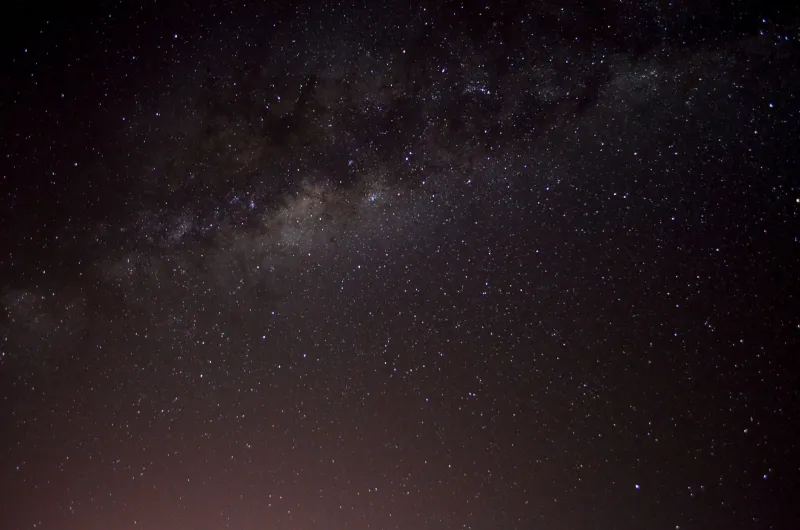
There is something quietly profound about a binary star. Two suns, gravitationally bound across cosmic timescales, appearing to the naked eye as a single pinprick of light — and yet, through a carefully configured telescope and camera, they reveal themselves as distinct, colorful companions separated by nothing more than a sliver of dark sky. Capturing that separation cleanly, without the two stars bleeding into each other or blooming into formless halos, is among the most technically demanding disciplines in astrophotography.
This is not a challenge of patience alone. It demands a methodical understanding of optics, sensor behavior, atmospheric physics, and digital processing. The good news is that with the right framework, even modest equipment can produce frames that genuinely resolve some of the night sky's most celebrated stellar pairs.
Understanding the Core Problem: Resolution and Diffraction
Before adjusting a single camera setting, it helps to understand why binary stars are so difficult to photograph cleanly. Every optical system has a theoretical resolution limit, defined by the Rayleigh criterion: approximately 138 divided by the aperture in millimeters, expressed in arcseconds. A 100mm refractor, for instance, can theoretically resolve stars separated by roughly 1.38 arcseconds under perfect conditions.
In practice, atmospheric seeing — the turbulence in Earth's atmosphere that causes stars to shimmer — frequently degrades this limit significantly. On a night of average seeing in most US locations, even a large aperture instrument may struggle to resolve pairs tighter than 2 to 3 arcseconds. This is why site selection and timing matter as much as equipment choice. Observing from elevated, arid locations such as those found in the American Southwest or the high desert plateaus of New Mexico and Arizona offers measurably better seeing than humid coastal environments.
Diffraction rings compound the challenge further. Every star in your frame is surrounded by an Airy disk — a central bright spot encircled by faint concentric rings — and when two stars are placed close together, their Airy disks overlap. Long exposures amplify this overlap, merging what might otherwise be distinguishable companions into a single elongated blob.
Focal Length and Aperture: Choosing the Right Optical System
For resolving tight doubles, longer focal lengths are generally your ally. A focal ratio of f/10 or higher produces a larger image scale on your sensor, spreading the star disks across more pixels and giving you more room to distinguish one companion from another. Classic choices among serious double-star imagers include Cassegrain and Schmidt-Cassegrain telescopes — instruments like the Celestron C8 or C11, with focal lengths ranging from 2,000mm to 2,800mm, deliver image scales well-suited to resolving pairs in the 1 to 3 arcsecond range.
Aperture plays a dual role. Larger apertures collect more light, but they also increase the angular size of diffraction artifacts. For very tight pairs, some imagers deliberately stop down their instrument using an aperture mask — a technique borrowed from solar observation — to produce a cleaner, more circular Airy disk at the cost of light-gathering power.
High-quality apochromatic refractors in the 100mm to 150mm range deserve mention as well. Their exceptional correction of chromatic aberration renders stars as tighter, more color-accurate points, which is particularly valuable when imaging pairs with a large magnitude difference between companions — a configuration that tends to cause the brighter star's halo to overwhelm the dimmer one.
Camera Settings: Short, Sharp, and Stacked
The single most important adjustment you can make when photographing binary stars is to radically shorten your exposure time. Where a typical deep-sky image might call for three to five minute sub-exposures, double-star work often demands exposures measured in milliseconds to single seconds.
This technique — frequently called lucky imaging — exploits moments of atmospheric stability. By capturing hundreds or thousands of very short exposures, you statistically increase the chance that some frames will coincide with a brief period of exceptional seeing. Software such as AutoStakkert!3 or Registax can then rank these frames by quality, selecting the sharpest percentage and aligning them with sub-pixel precision before combining them into a final image that approaches the theoretical resolution limit of your optics.
For camera choice, a dedicated planetary or high-speed astronomy camera such as the ZWO ASI224MC or the Player One Neptune-C II excels in this role. These cameras offer frame rates of 50 to 200 frames per second at small region-of-interest settings, generating the large frame pools that lucky imaging requires. A cooled monochrome variant paired with RGB filters will yield even finer results for publication-quality work, though the workflow complexity increases considerably.
Gain settings warrant careful attention. Running your camera at high gain reduces read noise but elevates shot noise and can introduce banding artifacts. For bright stellar pairs, a moderate gain setting that keeps the primary star's core just below the sensor's saturation point is the practical target. Reviewing your histogram after each test sequence is non-negotiable.
Managing Blooming and Contrast: Post-Processing Strategies
Even well-exposed short-frame sequences will require deliberate post-processing to separate companions cleanly. After stacking your best frames in AutoStakkert!3 or a comparable application, the resulting master frame typically benefits from wavelet sharpening — a multi-scale technique that amplifies fine detail at different spatial frequencies without grossly amplifying noise. Registax's wavelet panel remains a community favorite for this step, offering intuitive sliders that progressively enhance resolution from coarse to fine scales.
In Adobe Photoshop or PixInsight, a targeted approach using the Unsharp Mask or the more sophisticated Deconvolution tools can further tighten star profiles. PixInsight's Deconvolution module, when applied with a carefully constructed point spread function derived from your actual star data, is particularly effective at recovering separation between close companions.
Contrast management between unequal pairs — say, a magnitude 3 primary alongside a magnitude 8 secondary — often requires luminosity masking. By creating a mask that protects the bright star's core while allowing aggressive processing in the surrounding region, you can suppress halo spread without clipping the fainter companion entirely. This is painstaking work, but it is precisely what separates a competent double-star image from a genuinely striking one.
Recommended Target Pairs for US Observers
Not every binary system demands the same level of technical heroics. For those beginning to explore this discipline, visually wide pairs with interesting color contrast offer an accessible entry point. Albireo in Cygnus — a gold and blue pair separated by roughly 35 arcseconds — is perhaps the most beloved double star in the northern sky and can be cleanly resolved even with a short focal length instrument and modest camera. Mizar and Alcor in Ursa Major, though technically a naked-eye pair, photograph beautifully with modest equipment.
For more advanced practitioners, Epsilon Boötis (Izar) at 2.8 arcseconds and Gamma Leonis (Algieba) at around 4 arcseconds present genuine optical challenges that reward careful lucky-imaging sessions. Both are accessible from most of the continental United States during their respective seasonal windows.
The double-double Epsilon Lyrae — two pairs of binary stars forming a quadruple system — represents the kind of target that tests an entire imaging pipeline from optics through processing. Successfully rendering all four components as distinct points of light in a single frame is a meaningful benchmark of technical mastery.
A Frame Worth the Effort
Binary star photography occupies a unique space within astrophotography. It demands less aperture than many deep-sky disciplines, less dark sky than galaxy imaging, and less specialized equipment than solar work — but it rewards precision and discipline more consistently than almost any other subject. Every resolved pair is a small triumph of optics, timing, and craft. When two points of light emerge clearly separated in your final frame, distinct in color and brightness, each one a sun in its own right, you have done something genuinely difficult well. That is precisely the kind of image worth framing.