Pixels and Algorithms: How Artificial Intelligence Is Reshaping the Art of Astrophotography
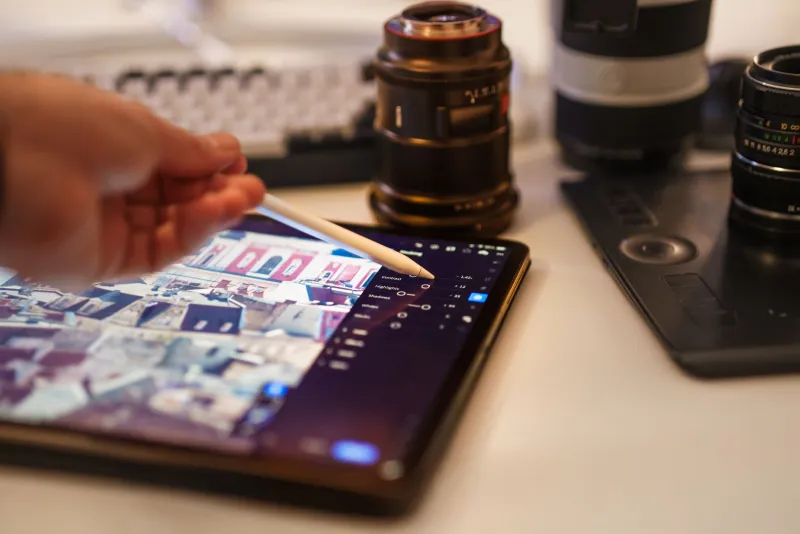
Not long ago, coaxing a clean, detailed image of the Andromeda Galaxy from a backyard telescope required dozens of stacked exposures, painstaking manual calibration frames, and hours hunched over software like PixInsight or DeepSkyStacker. Today, a growing suite of AI-powered tools promises to compress that workflow dramatically — and the results, in many cases, are genuinely breathtaking.
But the rise of algorithmic post-processing has sparked a lively and sometimes contentious debate within the astrophotography community. Are these tools empowering a new generation of cosmic imagers, or are they quietly eroding the scientific credibility and authentic artistry that define the discipline at its best?
What AI Tools Are Actually Doing to Your Starlight
At their core, AI post-processing applications rely on deep learning models trained on vast libraries of astronomical images. When you feed a noisy, single-exposure frame into a tool like Topaz DeNoise AI or Astro Panel's neural filters, the software isn't simply averaging pixel values the way traditional stacking does. Instead, it draws on pattern recognition to distinguish genuine signal — the photons that actually bounced off a nebula — from thermal noise, read noise, and atmospheric interference.
The practical implications are significant. Astrophotographers working under light-polluted suburban skies, or those limited to shorter exposures by equipment constraints, can now recover detail that would previously have required either pristine dark skies or many additional hours of integration time. Tools such as Starnet++ use AI to cleanly separate star fields from nebulosity, enabling more precise processing of each component independently. Meanwhile, platforms like Astro Pixel Processor have begun incorporating machine learning into their gradient removal and color calibration routines.
Beyond noise reduction, AI-driven object identification tools — some integrated directly into planetarium software like Stellarium and SkySafari — can analyze a finished image and tag catalogued objects automatically, cross-referencing databases like the NGC, IC, and Messier catalogs. For educators and science communicators, this functionality alone represents a meaningful leap forward.
The Professional Perspective: Enhancement Versus Fabrication
Not everyone in the professional astrophotography world is celebrating unconditionally. Imaging specialists who contribute to citizen science programs — such as those affiliated with the American Association of Variable Star Observers (AAVSO) or contributing data to platforms like Galaxy Zoo — draw a sharp distinction between aesthetic enhancement and scientific documentation.
"If you're creating an image for a gallery print or a magazine spread, aggressive AI sharpening or detail hallucination may be perfectly acceptable as a creative choice," explains one award-winning astrophotographer based in New Mexico whose work has appeared in NASA's Astronomy Picture of the Day archive. "But if that same image is being submitted as observational data, any algorithm that synthesizes detail the telescope didn't actually capture is a serious problem."
This concern centers on a known limitation of generative AI models: they can occasionally "hallucinate" fine structure — subtle filaments in a nebula, faint companion galaxies, or granular detail in a planetary atmosphere — that exists in the training data but was not present in the original raw capture. For a wall print, the difference may be invisible and inconsequential. For a researcher measuring a variable star's light curve or mapping the morphology of a galaxy cluster, it could introduce genuine scientific error.
A Practical Framework: Choosing the Right Tool for the Right Purpose
The good news is that the astrophotography community has largely converged on a sensible working framework. The critical variable is intended use.
For artistic and outreach imagery, tools like Topaz DeNoise AI, Luminar Neo's AI Sky Enhancer, and Adobe Lightroom's Denoise function offer excellent results with minimal risk. These applications are optimized for perceptual quality rather than photometric accuracy, and they produce images that communicate the scale and beauty of the cosmos with remarkable effectiveness.
For semi-scientific or citizen science applications, more conservative tools are advisable. BlurXTerminator, developed specifically for astronomical imaging, applies AI-based deconvolution that sharpens existing detail without synthesizing new structure. Similarly, NoiseXTerminator performs noise reduction while preserving the statistical properties of the underlying data — a crucial consideration for any image that may later be used for photometric analysis.
For professional scientific imaging, the consensus remains clear: AI enhancement tools should be used only for visualization and communication purposes, never on data intended for quantitative analysis. Raw calibrated frames and traditionally processed masters remain the standard for archival and research submissions.
Preserving the Craft Within the Algorithm
Perhaps the most nuanced argument against wholesale AI adoption isn't scientific at all — it's philosophical. Many veteran astrophotographers argue that the painstaking manual process of stacking, calibrating, and stretching an image cultivates a deeper understanding of the physics involved. Learning why a particular integration time reduces shot noise, or why flat frames correct for vignetting, builds intuition that no automated pipeline can replicate.
"There's something that happens when you spend four hours manually processing a nebula," reflects one community educator who runs astrophotography workshops across the American Southwest. "You start to understand the data. You understand what you're actually looking at. When an algorithm does it in 30 seconds, you might get a prettier picture, but you've skipped the education."
This perspective doesn't dismiss AI tools outright — it contextualizes them. Used thoughtfully, algorithms can accelerate workflow and democratize access to high-quality imaging. Used as a substitute for foundational knowledge, they risk producing a generation of astrophotographers who can operate software without truly understanding the light they're capturing.
The CelestialFrame Recommendation
AI-enhanced post-processing represents one of the most significant developments in astrophotography since the transition from film to digital sensors. The tools available in 2025 are genuinely impressive, and dismissing them entirely would be both impractical and shortsighted.
The responsible path forward is one of informed intentionality. Know your tools, understand their limitations, and match them to your purpose. Label AI-enhanced images clearly when sharing them publicly. Preserve your raw and minimally processed files. And never stop learning the underlying science that makes every photon you capture worth chasing in the first place.
The universe doesn't need our algorithms to be extraordinary. But used wisely, those algorithms can help more people see just how extraordinary it truly is.