Your 2025 North American Sky Calendar: The Best Spots to Witness Eclipses, Meteor Showers, and More
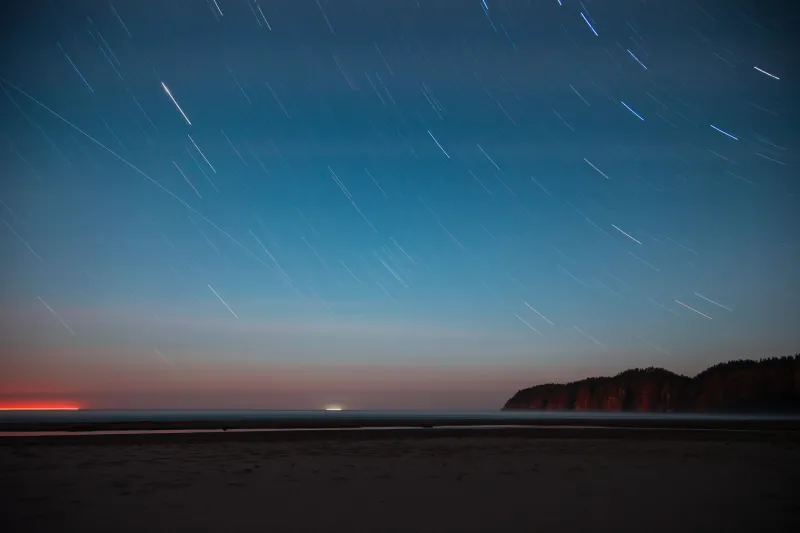
The sky above North America in 2025 is not short on ambition. Whether you are a seasoned astrophotographer with a trunkful of tracking mounts and telephoto lenses or a curious newcomer who just purchased their first pair of astronomy binoculars, this year's celestial calendar offers events worth planning around — and in some cases, worth driving hundreds of miles to witness firsthand.
What follows is CelestialFrame's curated, location-focused guide to the major astronomical events crossing North America in 2025, complete with optimal viewing sites, equipment guidance, and the logistical details that separate a successful sky chase from a frustrating night of clouds and missed opportunities.
March 14: Total Lunar Eclipse — Coast-to-Coast Visibility
The year opens its astronomical highlights with a total lunar eclipse on the night of March 13–14, fully visible across the contiguous United States, Canada, and most of Mexico. Totality — the period during which Earth's shadow completely engulfs the Moon, casting it in the characteristic copper-red hue that has earned this phenomenon the popular nickname "Blood Moon" — is projected to last approximately 65 minutes.
Best viewing locations: Unlike solar eclipses, lunar eclipses require no special travel; any location with a clear southeastern horizon and dark enough skies to appreciate the subtle color gradations will suffice. That said, the experience is markedly richer away from urban light pollution. Top domestic picks include:
- Cherry Springs State Park, Pennsylvania — one of the East Coast's premier dark-sky preserves, designated a Gold-tier International Dark Sky Park.
- Big Bend National Park, Texas — remote, expansive, and offering some of the darkest skies in the lower 48 states.
- Great Basin National Park, Nevada — minimal light pollution, high elevation, and reliably stable atmospheric conditions in mid-March.
Equipment: A standard DSLR or mirrorless camera with a 200–400mm telephoto lens on a sturdy tripod is sufficient for compelling lunar eclipse photography. A tracking mount is helpful but not essential given the Moon's relatively slow movement during totality. Shoot in RAW format and bracket your exposures — the dynamic range between the bright limb and the deeply shadowed totality phase is considerable.
Timing: Totality begins at approximately 2:26 a.m. EDT / 11:26 p.m. PDT. Plan to arrive at your location well before midnight to set up equipment and allow your eyes to dark-adapt.
August 11–13: Perseid Meteor Shower Peak
The Perseids are arguably the most beloved annual meteor shower in the Northern Hemisphere, and the 2025 peak falls on the night of August 11–12, with strong activity continuing into August 12–13. Under ideal conditions, observers at dark-sky sites can expect rates of 50 to 100 meteors per hour at peak, with occasional bright fireballs that can illuminate an entire landscape.
The Moon's phase in mid-August 2025 will be a waning crescent, meaning minimal lunar interference during the prime early-morning viewing window — an unusually favorable circumstance that should not be wasted.
Best viewing locations:
- Glacier National Park, Montana — the combination of dark skies, mountain silhouettes, and northerly latitude makes this one of the finest Perseid venues in the country.
- Acadia National Park, Maine — the rocky Atlantic coastline provides dramatic foreground for wide-field astrophotography, and the park's relative humidity tends to drop in mid-August.
- Capitol Reef National Park, Utah — central Utah's Colorado Plateau offers exceptional atmospheric transparency and minimal regional light pollution.
- Boundary Waters Canoe Area Wilderness, Minnesota — for those willing to paddle to a truly remote campsite, the BWCAW delivers some of the darkest skies east of the Rockies.
Equipment: Wide-angle lenses in the 14–24mm range, fast apertures (f/1.8 to f/2.8), and a camera capable of ISO 3200 or higher without excessive noise are the standard toolkit. An intervalometer enables continuous shooting throughout the night without manual intervention. For composite images capturing multiple meteor trails, plan on shooting sequences of 15–25 second exposures across a three-to-four-hour window centered on 2:00–4:00 a.m. local time.
Travel logistics: Reservations at national park campgrounds fill months in advance for peak Perseid weekend. Book accommodations no later than May, or consider staying in gateway towns and driving to dark-sky access points. Bring warm layers regardless of the daytime forecast — temperatures at elevation drop sharply after midnight even in August.
September 7: Partial Lunar Eclipse
A second lunar eclipse graces the calendar on September 7, though this event is partial rather than total — Earth's umbral shadow will cover roughly 85 percent of the lunar disk at maximum. While less dramatic than March's total eclipse, a deep partial lunar eclipse still produces striking color gradations and offers excellent photographic opportunities, particularly when composed with interesting foreground elements.
This eclipse is best observed from the eastern half of the United States, where the Moon will be well above the horizon at maximum eclipse (approximately 10:11 p.m. EDT).
October–November: Orionid and Leonid Meteor Showers
As summer yields to autumn, two additional meteor showers merit attention. The Orionids peak around October 21–22, producing approximately 20 meteors per hour under dark skies — modest by Perseid standards, but notable for the exceptional speed of their meteors, which enter the atmosphere at roughly 148,000 mph and frequently produce persistent glowing trains.
The Leonids follow in mid-November (peak: November 17–18), with typical rates of 10–15 meteors per hour in most years. Historically, the Leonids have produced spectacular storm-level outbursts, though none are currently predicted for 2025. Still, this shower rewards dedicated observers with fast, bright meteors radiating from the constellation Leo.
For both showers, the American Southwest — particularly the dark-sky corridors of New Mexico, Arizona, and southern Utah — offers the most consistent fall viewing conditions.
Planning Your Sky Chase: General Guidance
Regardless of which event draws you out, several universal principles apply to successful celestial event photography and observation.
Monitor weather aggressively. Clear Sky Chart (cleardarksky.com) and Astrospheric provide astronomy-specific forecasts that account for cloud cover, atmospheric transparency, and seeing conditions — far more useful than standard weather apps for planning purposes.
Arrive early. Equipment setup, dark adaptation, and test exposures all require time. Arriving 60 to 90 minutes before an event's peak is the minimum; two hours is preferable.
Respect dark-sky etiquette. Use red-filtered flashlights exclusively, keep vehicle headlights off, and be courteous to fellow observers. Many of the best viewing sites are shared public spaces where community norms matter.
File for permits when required. Several national parks and state parks require photography permits for commercial or tripod-based shooting. Check the relevant land management agency's website well in advance.
The universe operates on its own schedule, indifferent to cloud cover and travel delays. But with careful preparation and the right location, 2025 offers North American observers a genuinely rewarding sequence of celestial moments — each one worth the effort of a single perfect frame.