Seasons of the Galaxy: A Region-by-Region Guide to Photographing the Milky Way Across the United States
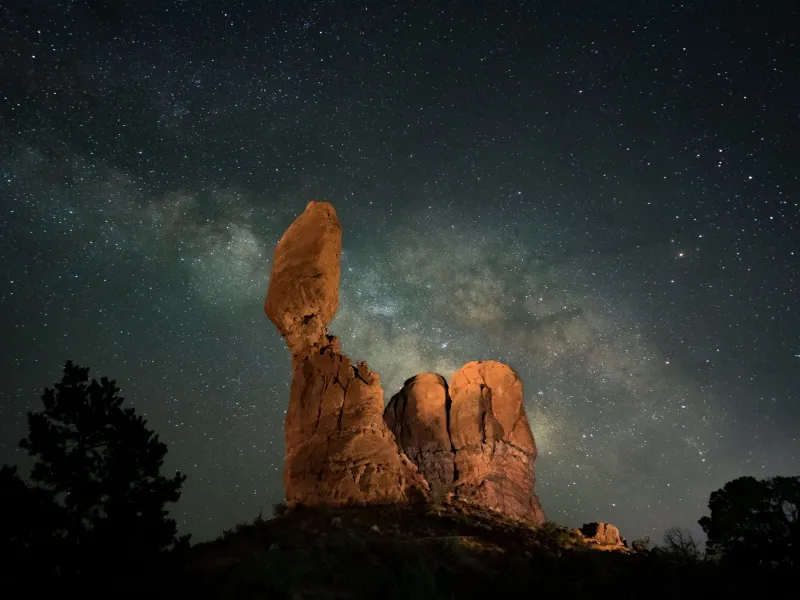
There is a moment, familiar to anyone who has stood beneath a truly dark sky, when the eye adjusts and the Milky Way resolves from a faint smear into something vast and structural — a river of light arching overhead with unmistakable intention. Chasing that moment is not simply a matter of finding darkness. It requires understanding how Earth's orientation relative to the galactic center changes throughout the year, and how your latitude shapes the geometry of what you see.
For photographers and observers distributed across the enormous geographic range of the United States, the Milky Way is not a single, fixed experience. It is a moving target, and learning to anticipate its behavior is the first step toward capturing frames that genuinely reflect its grandeur.
Understanding the Galactic Core Window
The brightest and most photographically compelling portion of the Milky Way is the galactic core — the dense, luminous bulge centered on Sagittarius. Because Earth orbits the Sun, that core is only visible during certain months when our nightside faces toward the galactic center rather than away from it.
For observers in the contiguous United States, the galactic core is generally accessible from approximately late February through early November, with peak visibility occurring between May and September. During winter months, the core sits below the horizon or rises only briefly before dawn, making extended imaging sessions impractical. The winter Milky Way — the arm stretching through Orion and Perseus — is visible during those colder months but lacks the dramatic density of the summer core.
The practical implication is straightforward: if your primary goal is to photograph the iconic, cloud-rich galactic center, you are working within a defined seasonal window, and planning around that window is non-negotiable.
The Southern Tier: Florida, Texas, and the Desert Southwest
Observers in the southernmost latitudes of the United States enjoy a significant geometric advantage. From Florida's Big Cypress National Preserve, the Texas Hill Country, or the high desert plains of southern New Mexico, the galactic core rises to a considerably greater elevation above the southern horizon than it does from states farther north. Higher altitude in the sky translates directly to less atmospheric interference — and for astrophotographers, that means sharper detail, truer color, and reduced atmospheric dispersion.
In south Florida, the core can clear 35 degrees above the horizon at its highest point in midsummer, a figure that drops to roughly 20 degrees for observers in Montana or the northern Great Plains. That 15-degree difference may sound modest, but it represents a substantial reduction in the air mass your light must travel through, with measurable effects on image quality.
From the Davis Mountains of west Texas or the White Sands area of New Mexico, the combination of elevation, low humidity, and minimal light pollution creates conditions that rival many internationally celebrated dark-sky destinations. The Milky Way season here effectively begins in March, when the core first appears above the southeastern horizon in the pre-dawn hours, and extends well into October.
Compositional opportunity: In flat terrain like the Texas plains, a wide foreground — an abandoned ranch road, a field of bluebonnets in spring — creates powerful horizontal contrast against a vertically arcing galaxy. A 14mm to 24mm lens at f/2.8 or faster, with exposures in the 15–25 second range at ISO 1600–3200, represents a reliable starting configuration.
The Mountain West: Colorado, Utah, and Wyoming
The elevated terrain of the Rocky Mountain states introduces a different set of variables. Higher base altitude means a thinner atmosphere overhead, which benefits image clarity, but mountain ranges also create dramatic foreground opportunities that flat-country observers can only dream about.
Utah's canyon country — Arches National Park, Canyonlands, Capitol Reef — has become something of a pilgrimage destination for American astrophotographers, and the reasons are visually self-evident. The combination of sculpted red-rock formations and a Milky Way rising behind them produces compositions with an almost cinematic quality. Permits and regulations vary by location, so researchers are advised to consult the National Park Service's night photography guidelines before planning an expedition.
In Wyoming's Grand Teton and Yellowstone regions, the Milky Way season aligns conveniently with summer tourism windows, though photographers seeking solitude will find that weekday sessions in shoulder months — June or September — offer significantly reduced crowds at popular viewpoints.
At these latitudes (approximately 37–45 degrees North), the galactic core reaches a maximum elevation of roughly 25–30 degrees in midsummer, which is workable but requires careful attention to southern horizon obstructions. Scout locations in daylight to confirm an unobstructed view toward the south-southeast.
The Pacific Northwest and Northern Tier
For observers in Washington, Oregon, northern Idaho, and the Upper Midwest, the Milky Way season is compressed but not absent. The core is accessible from roughly April through September, though the notorious cloud cover of the Pacific Northwest demands flexibility and patience.
The Oregon Outback — the high desert region east of the Cascades — offers some of the darkest skies in the Pacific Northwest, largely sheltered from marine moisture systems. Hart Mountain National Antelope Refuge and the Alvord Desert are established destinations within this region. Eastern Washington and northern Idaho similarly benefit from the rain shadow effect of the Cascades and Rockies respectively.
At these northern latitudes, the galactic core never climbs particularly high, which means foreground elements become even more critical to a successful composition. Low-angle perspectives that emphasize sweeping terrain — lava fields, high desert playas, conifer silhouettes — help compensate for a galaxy that hugs the southern sky.
Alaska: The Edge of the Frame
Alaska presents a paradox for Milky Way photographers. Its extraordinary darkness and remoteness are offset by a fundamental astronomical challenge: during summer, when the galactic core is best positioned, Alaska experiences near-continuous twilight at high latitudes. True astronomical darkness — when the Sun sits more than 18 degrees below the horizon — may not occur at all during June and July above the 60th parallel.
The solution is to target the shoulder seasons. In late August and September, darkness returns to interior Alaska, and the galactic core is still positioned acceptably in the southern sky. Denali National Park, the Kenai Peninsula, and the Wrangell–St. Elias region all offer extraordinary dark-sky access during this window. As a bonus, September frequently coincides with the onset of aurora activity, creating the rare possibility of capturing both phenomena in a single frame.
Planning Tools and Final Considerations
Several freely available applications simplify the logistical side of Milky Way planning. PhotoPills, Stellarium, and The Photographer's Ephemeris all allow users to simulate the galaxy's position at any location, date, and time — an invaluable capability when scouting locations remotely. Moon phase is equally critical; a full or gibbous moon will wash out the fainter galactic structure entirely. New moon windows, which recur roughly every 29.5 days, define the practical calendar for serious galactic imaging.
The Milky Way does not reward passive observation. It requires planning, patience, and a willingness to travel toward darkness. But for those who make the effort, the galaxy reveals itself as something more than a photographic subject — it becomes a reminder of the extraordinary scale of the structure we inhabit, captured one frame at a time.