Signal Archaeology: Advanced Techniques for Recovering Faint Astronomical Objects Without Corrupting the Data
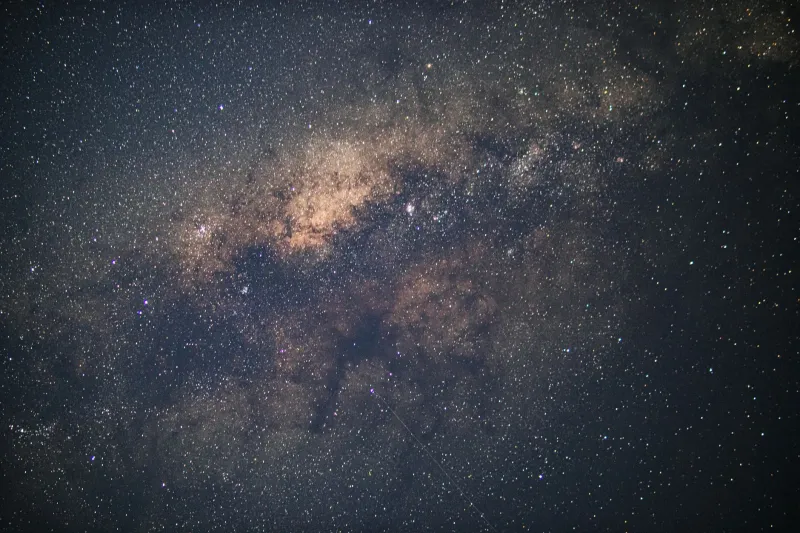
Every calibrated, stacked astrophotography dataset contains more information than a standard processing workflow will reveal. Faint galaxy halos, the outer shells of planetary nebulae, low-surface-brightness companions, and the gossamer filaments of emission regions all exist in the data — but they exist at signal levels that are easily destroyed by aggressive stretching, obscured by noise, or confused with processing artifacts by an imager who has not yet developed the diagnostic eye to tell them apart.
Recovering that buried signal is one of the most intellectually demanding aspects of astrophotography. It sits at the intersection of statistics, optics, and astronomy, and it rewards imagers who approach it with rigor rather than intuition. The goal is not to create the appearance of detail that was not recorded. The goal is to reveal, faithfully and verifiably, the detail that is already present.
Understanding the Noise Floor: What You Are Working Against
Before any recovery technique can be applied intelligently, the imager must understand the composition of the noise in their stacked data. Astronomical image noise is not a single phenomenon. It is the sum of several independent components, each with different statistical properties and different implications for processing strategy.
Read noise originates in the camera's electronics and is effectively fixed per frame. Modern back-illuminated CMOS sensors have reduced this to levels that were unimaginable a decade ago, but it remains present and contributes a Gaussian noise floor to every pixel.
Shot noise arises from the quantum nature of light itself. Because photons arrive at the sensor randomly, even a perfectly uniform light source will produce pixel-to-pixel variation proportional to the square root of the signal level. This means that the faintest parts of an image — precisely the regions of greatest interest in faint object recovery — have the worst signal-to-noise ratio by definition.
Sky background noise is the contribution of light pollution, airglow, and zodiacal light to the overall background level. It adds shot noise of its own, raising the noise floor across the entire frame and making faint signal harder to distinguish.
Stacking multiple frames reduces random noise in proportion to the square root of the number of frames, which is why integration time is so fundamental to faint object work. But stacking cannot reduce noise below the photon statistics imposed by the physics of the situation. At some point, the imager must work with the data as it exists — and the question becomes how to extract signal from it without fabricating structure.
Non-Destructive Workflow Architecture
The foundation of responsible faint-signal recovery is a non-destructive processing workflow. Every operation should preserve the original calibrated stack, and every processing step should be applied in a way that can be undone, adjusted, or compared against the unprocessed data.
In practice, this means working in a layered environment — PixInsight's process history system, Photoshop adjustment layers, or equivalent tools in other applications — where each stage of processing is recorded and reversible. The calibrated stack is the ground truth. Everything applied to it is an interpretation, and that interpretation must remain transparent.
Linear processing — everything performed before the initial stretch — is the most consequential phase for faint signal recovery. Decisions made in the linear domain, including background modeling and subtraction, color calibration, and noise reduction, directly determine how much genuine signal survives into the stretched image. Errors introduced here cannot be corrected later.
Background modeling deserves particular attention. Tools such as PixInsight's DynamicBackgroundExtraction or Siril's background extraction module fit a mathematical model to the sky background using sample points that the imager selects. The accuracy of that model determines whether the faint halo of a galaxy is correctly distinguished from a gradient in the background — or mistakenly subtracted along with it. Placing background samples conservatively, well away from any potential astronomical signal, is the single most important practice for preserving faint extended emission.
Deconvolution: Power and Responsibility
Deconvolution is among the most powerful tools available for recovering fine detail from blurred or noise-limited data, and it is also among the most frequently misused. Understanding what deconvolution actually does is prerequisite to using it without generating artifacts.
At its core, deconvolution attempts to reverse the blurring effect of the point spread function (PSF) — the characteristic smear that the optical system, atmosphere, and tracking errors impose on every point source in the image. By modeling the PSF and mathematically inverting its effect, deconvolution can sharpen star images, improve resolution of planetary detail, and separate closely spaced features in nebulae and galaxies.
The danger lies in the fact that deconvolution amplifies noise as aggressively as it sharpens signal. Regularization algorithms — Richardson-Lucy, blind deconvolution with Total Variation regularization, and the methods implemented in tools such as PixInsight's Deconvolution or StarTools — apply constraints that prevent the algorithm from fitting noise as if it were signal. The degree of regularization is a parameter that the imager must set, and setting it too low produces ringing artifacts around bright stars and false detail in smooth regions that is entirely a product of the algorithm rather than the sky.
Best practice for deconvolution in faint object work includes applying it exclusively in the linear domain, using a PSF derived from actual stars in the image rather than a theoretical model, and validating the result by comparing deconvolved regions against the original stack at equivalent scale. Any feature that appears after deconvolution but is not at least marginally visible in the original should be regarded with skepticism until confirmed by independent data.
Wavelet Analysis: Separating Structure by Scale
Wavelet decomposition is the technique that most directly addresses the challenge of separating faint large-scale structure from high-frequency noise. By decomposing an image into a series of layers — each representing spatial detail at a different scale, from individual pixels to broad gradients — wavelet methods allow the imager to apply different processing strategies to different categories of information.
High-frequency wavelet layers contain fine detail: the cores of stars, the knots in emission filaments, the granular texture of galaxy disks. They also contain the highest concentration of random noise. Applying noise reduction selectively to these layers, while leaving lower-frequency layers untouched, can suppress noise without softening the large-scale structure that defines faint extended objects.
Low-frequency wavelet layers contain the broad halos, the outer shells, the diffuse emission that characterizes the faintest astronomical features. These layers are less noise-dominated but more vulnerable to background modeling errors and gradient contamination. Stretching these layers independently — more aggressively than the full image would tolerate — can reveal structure that a global stretch would bury in the background.
Tools including PixInsight's MultiscaleLinearTransform, Starnet++ workflows, and the wavelet processing modules in Siril implement these decompositions in ways accessible to imagers without a formal signal processing background. The key discipline is to treat each layer's output as provisional, always returning to the full-resolution data to confirm that revealed structure is consistent with the physics of the object being imaged.
Distinguishing Real Signal from Processing Artifacts
The most important skill in faint object recovery is not technical. It is epistemic: the ability to evaluate a claimed detection critically and distinguish genuine astronomical information from the products of aggressive processing.
Several practices support this discipline:
- Astronomical cross-referencing: Before treating a faint feature as a discovery, compare it against published survey data — SDSS, DSS, or PanSTARRS imagery available through Aladin Lite. If the feature appears in independent data, it is almost certainly real. If it does not, the burden of proof is high.
- Processing parameter sensitivity testing: Vary the parameters of each processing step — deconvolution regularization, wavelet layer weights, stretch curves — and observe whether the claimed feature persists across a range of settings or appears only under a specific combination. Robust signal is stable; artifacts are fragile.
- Independent dataset comparison: If the feature is scientifically interesting, attempt to confirm it with a second dataset captured on a different night, ideally under different conditions. Genuine astronomical structure will reproduce. Noise-driven artifacts will not.
The Integrity of the Image
Faint object recovery is ultimately an exercise in honesty — honesty about what the data contains, what the processing reveals, and where the boundary between signal and artifact lies. The astrophotography community's scientific credibility, and its contribution to genuine astronomical knowledge, depends on imagers who hold that boundary carefully.
The universe has placed extraordinary things within reach of modest apertures and careful technique. The goal of signal archaeology is not to manufacture the extraordinary, but to uncover it — one recovered photon at a time.