City Lights, Deep-Sky Dreams: How Urban Astrophotographers Are Producing World-Class Images Without Leaving the Suburbs
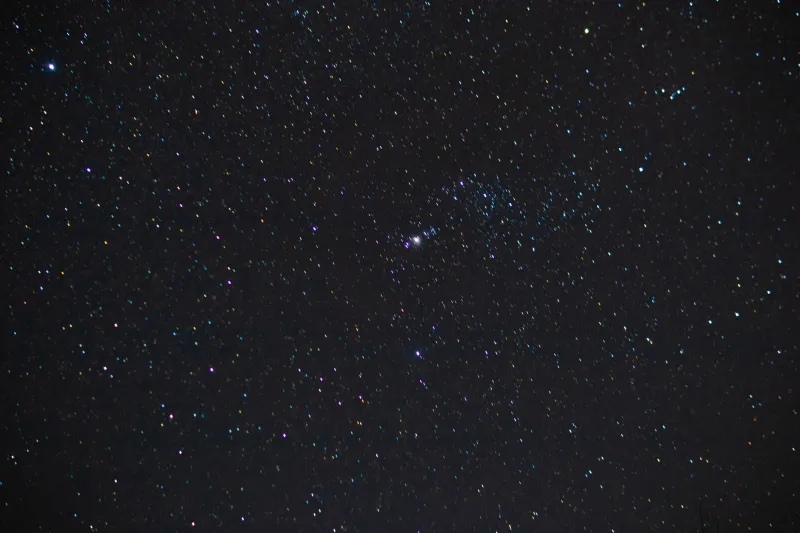
Drive thirty miles outside of Chicago, Los Angeles, or Houston on any clear night and you will find the same frustrating glow spreading across the horizon — a dome of amber and white that washes out the faintest whispers of nebulosity and turns a potentially dark sky into something closer to perpetual twilight. For decades, the conventional wisdom among astrophotographers was unambiguous: if you live near a city, accept mediocrity or drive until the glow disappears behind you.
That consensus is eroding rapidly. Across the United States, a dedicated cohort of imagers working from suburban driveways, apartment rooftops, and light-flooded backyards is producing deep-sky photographs that legitimately compete with work captured under Bortle 2 skies. Their secret is not better luck or superior equipment — it is a systematic approach that reframes urban light pollution from an obstacle into a manageable parameter.
Reframing the Problem: What Light Pollution Actually Does
Understanding why light pollution degrades astrophotos is the first step toward neutralizing its effects. Artificial sky glow is primarily a broadband phenomenon — street lamps, commercial signage, and residential lighting emit energy across a wide swath of the visible spectrum, raising the background signal level of every exposure you take. This elevated background compresses the dynamic range available to capture faint nebular detail and forces you to work harder to distinguish signal from noise.
Critically, however, most artificial light sources emit very little energy at specific narrow wavelengths — particularly the emission lines produced by ionized hydrogen, oxygen, and sulfur in deep-sky nebulae. Hydrogen-alpha emission at 656 nanometers, doubly ionized oxygen (OIII) at 501 nanometers, and ionized sulfur (SII) at 672 nanometers are the three pillars of narrowband astrophotography, and they represent a channel of the spectrum that urban light largely leaves uncontaminated.
This is the foundational insight that unlocks serious urban imaging: by restricting your camera to these narrow spectral windows, you are effectively filtering out the majority of the light pollution gradient while retaining the signal that matters most.
The Narrowband Arsenal: Filters That Change the Equation
Narrowband filters come in two primary bandwidth categories — 7nm filters, which offer a reasonable balance between light transmission and sky glow rejection, and the more aggressive 3nm variants, which are specifically engineered for severely light-polluted environments. For imagers working within 30 miles of a major US city, a 3nm hydrogen-alpha filter represents one of the most impactful single purchases available.
The Optolong L-eXtreme and the Astronomik 6nm Ha filter are popular entry-level choices that perform well on one-shot color cameras — a practical consideration for urban imagers who may not want the added complexity of a monochrome setup. For those willing to invest in a dedicated monochrome camera and a filter wheel, a full narrowband suite covering Ha, OIII, and SII opens the door to the iconic Hubble Palette color mapping, which renders nebulae in the dramatic gold-and-teal color scheme familiar from Space Telescope imagery.
It is worth noting that not every deep-sky object benefits equally from narrowband filtration. Emission nebulae — structures like the Orion Nebula, the Crab Nebula, the Rosette, and the vast networks of hydrogen clouds threading through Cygnus — are ideal narrowband targets. Galaxies and star clusters, which emit primarily in broadband light, are considerably more challenging from light-polluted sites and are better reserved for travel to darker locations.
Strategic Target Selection: Playing to the Urban Imager's Strengths
Urban astrophotographers who consistently produce strong work tend to plan their imaging sessions around targets rather than adapting their targets to whatever happens to be overhead. This means building a seasonal target list composed almost entirely of emission-rich objects positioned high in the sky during their imaging window — altitude being a secondary factor in reducing the atmospheric path length through which light pollution must travel.
Summer and early autumn are particularly productive seasons for US urban imagers. The Cygnus Wall region of the North America Nebula, the Veil Nebula supernova remnant, the Crescent Nebula in Cygnus, and the Pelican Nebula all ride high above the horizon during these months and are among the most hydrogen-alpha-rich targets in the northern sky. In winter, the California Nebula in Perseus and the vast Barnard's Loop surrounding the Orion complex offer compelling alternatives.
One case study worth examining: astrophotographer David Rankin, imaging from a suburban site in the San Jose, California metro area — well within the light dome of a city of over one million people — captured a widely circulated image of the Cygnus Wall using a 3nm Ha filter and 12 hours of accumulated exposure time. The resulting image showed wispy, three-dimensional nebular structure in detail that would have been credible from a Bortle 4 dark site. The narrowband filter, combined with aggressive stacking, effectively neutralized the suburban sky gradient.
Stacking Methodology: The Mathematics of Signal Recovery
If narrowband filtration is the first pillar of urban astrophotography, image stacking is the second. Every individual sub-exposure captured from a light-polluted site contains a mixture of genuine celestial signal and elevated noise floor. Stacking — mathematically combining dozens or hundreds of sub-frames using sigma clipping or Winsorized rejection algorithms — exploits the statistical difference between coherent signal and random noise: signal adds constructively while noise averages toward zero.
The practical implication is that exposure time, accumulated through stacking rather than through single long exposures, is your primary tool for pulling faint structure out of a bright background. Urban imagers frequently accumulate eight to twenty hours of total integration time on a single target, spread across multiple nights. This is not a weekend project — it is a months-long commitment, and the scheduling flexibility of imaging from home rather than traveling to a dark site makes that commitment genuinely manageable.
Software choices matter here. PixInsight's ImageIntegration module with kappa-sigma rejection is the professional standard and offers fine-grained control over the rejection parameters that determine which pixels are discarded as outliers. For those on a tighter budget, the free application Siril provides comparable stacking functionality and has a devoted community producing excellent results from suburban backyards across the country.
Post-Processing for the Light-Polluted Frame
Even after narrowband filtration and deep stacking, a raw integrated frame from a suburban site will typically display a non-uniform background gradient — a gradual brightening toward the portion of the frame closest to the light pollution source. Gradient removal is therefore a non-negotiable first step in the processing workflow.
PixInsight's DynamicBackgroundExtraction tool generates a background model by sampling regions of the frame that should contain only empty sky, then subtracts that model from the entire image. Applied carefully, it can flatten a severely gradient-affected frame into something approaching the uniformity of a dark-site image. The key is sampling the background points judiciously — avoiding nebular regions while capturing enough of the sky to build an accurate model.
From there, the workflow converges with standard narrowband processing: stretching the histogram using an arcsinh or masked stretch, applying noise reduction through tools like Topaz DeNoise AI or PixInsight's NoiseXTerminator, and carefully mapping the Ha, OIII, and SII channels to RGB color using the Hubble Palette or a natural-color hydrogen-oxygen blend. The final result, when the process is executed well, bears little visible evidence of its suburban origin.
The Paradox Resolved
The urban astronomer's paradox — that the most accessible locations for imaging are also the most hostile to it — turns out to be less absolute than it first appears. Light pollution is a real constraint, but it is a constraint with known properties and established countermeasures. The imagers who thrive under city skies are not working around physics; they are working with it, exploiting the narrow spectral windows that artificial light leaves uncontaminated and compensating for elevated noise through sheer accumulated signal.
The night sky above your city is not the sky you deserve, but it may be more productive than you think. The tools exist. The techniques are documented. The only remaining question is whether you are willing to put in the hours — and those hours, conveniently, require no travel at all.