More Glass, Fewer Skills: Why Chasing the Next Telescope Is Quietly Sabotaging Your Growth as an Astronomer
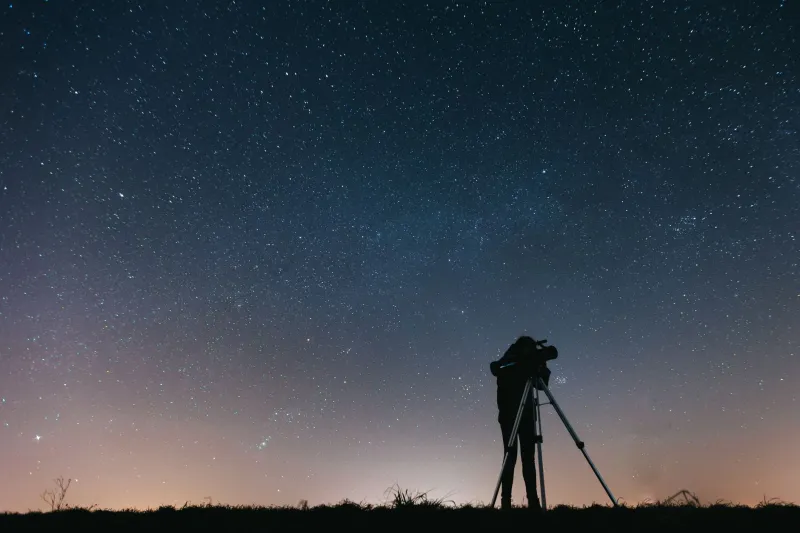
There is a particular kind of frustration familiar to anyone who has spent time in amateur astronomy forums: you post an image of the Orion Nebula, someone admires it, and within three replies the conversation has shifted entirely to aperture recommendations, mount ratings, and the relative merits of two refractors you cannot currently afford. The image — the actual celestial frame you labored over — becomes secondary. The gear becomes the story.
This is not a coincidence. It is a cultural pattern, and according to a growing number of experienced observers, it is doing measurable harm to the community's collective development.
The Upgrade Impulse, Examined
Human beings are wired to seek solutions through acquisition. When results disappoint, the instinct is often to attribute the shortcoming to tools rather than technique. In astrophotography, this impulse is particularly seductive because the equipment genuinely does matter — aperture captures more light, precision mounts reduce tracking error, and high-quality glass produces sharper stars. The causal link between gear and output is real enough to feel like justification every time.
But that logic contains a quiet trap. "The moment you convince yourself that your current scope is the limiting factor, you stop learning how to use it," says David Harrington, a retired electrical engineer from Tucson, Arizona, who has been imaging the night sky for over two decades. Harrington sold a premium apochromatic refractor after eighteen months, replaced it with a larger Newtonian, and then spent the following year struggling with collimation, thermal equilibration, and coma correction — problems his previous instrument never presented. "I traded a set of skills I was close to mastering for an entirely new learning curve. My images actually got worse for almost a year."
Harrington's experience is not unusual. Among experienced imagers, the narrative of the premature upgrade — the scope sold before its potential was fully realized — surfaces with remarkable consistency.
What the Data Suggests About Skill Versus Aperture
While rigorous longitudinal studies of amateur astronomer development are scarce, the available evidence from imaging competitions and community image archives tells an instructive story. Entries that consistently earn high marks at regional star parties and online showcases are not dominated by images captured with the most expensive setups. Technique — specifically, calibration discipline, guiding accuracy, stacking methodology, and post-processing restraint — accounts for a disproportionate share of what separates compelling images from mediocre ones.
Consider what a modest 80mm refractor, properly polar-aligned on a well-tuned mount, with carefully acquired calibration frames, can produce compared with a 10-inch Schmidt-Cassegrain operated carelessly. The former, in practiced hands, routinely outperforms the latter in sharpness, color accuracy, and overall aesthetic quality. The aperture advantage of the larger instrument evaporates when the human operating it has not yet internalized the fundamentals.
"Aperture is the last variable I consider when I'm evaluating someone's images," says Marlena Voss, an astrophotography educator based in Denver who has taught imaging workshops across the Mountain West for fifteen years. "I can usually tell within thirty seconds whether someone has spent their time learning their equipment or shopping for new equipment. The images make it obvious."
The Economics of the Upgrade Cycle
Beyond skill stagnation, the financial dimension of habitual upgrading deserves honest scrutiny. The used telescope market in the United States is robust, which means that selling an existing scope to fund its replacement is genuinely feasible — but rarely as economical as it appears. Depreciation on optical equipment, particularly computerized mounts and electronic accessories, can be steep. Shipping costs, platform fees on resale sites, and the inevitable discovery that the replacement gear requires additional accessories (a new focuser, different rings, compatible adapters) erode the apparent savings further.
A hobbyist who upgrades their primary imaging scope every two years over a decade may spend two to three times as much as a counterpart who invested in a single capable system and directed surplus funds toward quality eyepieces, a reliable power supply, or a dedicated astronomy camera. The latter photographer, having spent years intimately acquainted with one instrument's behavior across seasons and targets, will almost certainly produce superior results.
Recognizing Genuine Upgrade Moments
None of this is an argument against ever upgrading. There are legitimate inflection points at which new equipment genuinely unlocks capabilities that technique alone cannot provide. The question is whether you have honestly arrived at one.
A meaningful upgrade is warranted when a specific, demonstrable ceiling has been reached — when your current aperture physically cannot collect enough light for the targets you are pursuing, when your mount's periodic error is measurably limiting your sub-exposure length despite proper polar alignment and guiding, or when you have outgrown a camera sensor for documented technical reasons rather than vague dissatisfaction.
Upgrading is probably premature when your last ten imaging sessions produced fewer than five keepers due to technique-related errors, when you have never successfully polar-aligned your current mount to within one arcminute, when your flat frames are inconsistently applied, or when you cannot yet reliably identify and correct star trailing, gradient artifacts, or focus drift in post-processing.
The honest self-assessment required here is uncomfortable. It demands that imagers attribute disappointing results to their own developing skills rather than to their equipment — and that attribution, however accurate, is rarely flattering.
A More Deliberate Path
Veteran observers who have navigated this terrain offer a consistent prescription: commit to a defined mastery period before any major purchase. Twelve months with a single imaging setup, across multiple target types and seasons, is a reasonable minimum. During that period, the goal is not simply to use the equipment but to understand it — to know how it behaves in summer humidity versus winter cold, how long it requires to reach thermal equilibrium, where its optical sweet spot lies, and how its quirks can be mitigated or exploited.
"Every telescope has a personality," Harrington notes. "The imagers I respect most have taken the time to actually know their instruments. They've made friends with the limitations. That relationship shows in their work in a way that raw aperture never can."
CelestialFrame exists, in part, to celebrate exactly that relationship — the patient, iterative, deeply human process of learning to see the universe through a specific piece of glass on a specific patch of earth. The most extraordinary images in our archives were not produced by the most expensive setups. They were produced by photographers who understood their tools profoundly and applied that understanding with discipline.
The next time the upgrade impulse arrives — and it will — consider directing that energy toward one more night under your current sky, with the instrument you already own, pursuing the mastery that no retailer can sell you.