The Waiting Game: How Strategic Patience Outperforms a Gear Upgrade Every Time
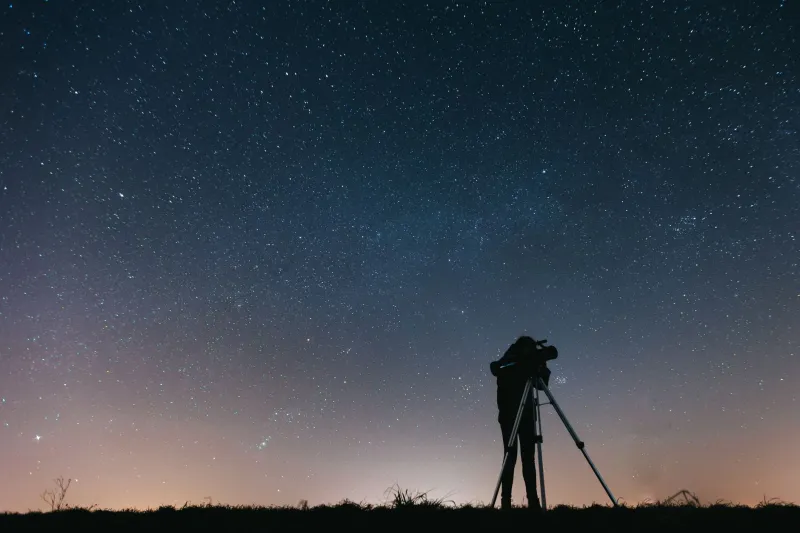
There is a recurring conversation that plays out in astronomy forums, club meetings, and equipment review comment sections across the United States, and it follows a familiar script. An imager shares a disappointing result — soft stars, washed-out nebulosity, a galaxy that refuses to show its spiral arms — and within minutes, the thread fills with suggestions: a faster focal ratio, a larger sensor, a more capable mount. The assumption embedded in almost every reply is that the image fell short because the equipment was insufficient.
Sometimes that assumption is correct. More often, it is not.
The variable that goes unexamined in the majority of those conversations is time — not integration time, but the strategic patience that determines whether a given target is imaged under conditions that make success genuinely possible. Aperture and sensor sensitivity are fixed quantities once the gear is purchased. The quality of the atmosphere above your backyard, the altitude of your target at transit, the phase of the moon, the season, and the stability of the jet stream are not fixed. They vary constantly, and learning to read and exploit that variation is a skill that compounds in value with every year of practice.
The Gear Acquisition Treadmill
The economics of astrophotography create a powerful incentive to equate spending with progress. Manufacturers release new sensors with improved read noise figures. Mount manufacturers announce higher payload ratings and more sophisticated periodic error correction. Telescope designers push focal ratios faster and fields of view wider. Each announcement carries an implicit promise: buy this, and your images will improve.
What that marketing narrative omits is that most amateur imagers are not operating anywhere near the limits of their current hardware. A well-collimated six-inch apochromatic refractor on a properly polar-aligned mount, imaging a target at or near culmination on a night of above-average seeing, is capable of producing results that would have been considered extraordinary a decade ago. The bottleneck, in the vast majority of cases, is not the instrument. It is the conditions under which the instrument is used — and the judgment of the operator in deciding whether those conditions are acceptable.
What Strategic Patience Actually Looks Like
Patience in this context is not passive. It is not simply waiting for clear skies. Strategic patience in astrophotography is an active discipline that combines meteorological awareness, target knowledge, and the willingness to close the observatory on a technically clear night because the conditions are not favorable enough to justify the effort.
Consider seeing forecasts. Resources such as Clear Outside, Astrospheric, and the numerical weather prediction models underlying them give US-based imagers increasingly reliable predictions of atmospheric stability at altitude. A night with transparency of 4/5 but seeing of 2/5 is not a good night for planetary imaging or for any target where resolution is the primary goal. An imager who understands this and chooses to wait — even for weeks — for a night where both metrics align will accumulate far more usable data per hour of effort than one who images on every technically clear night regardless of stability.
Target altitude is another dimension that rewards patience. A galaxy transiting at 35 degrees above the southern horizon for an observer in the northern United States is fighting through nearly three times the atmospheric column that the same target would traverse at 70 degrees altitude. Waiting — sometimes an entire year — for a target to reach a more favorable declination for your latitude, or for the season to place it higher in the sky during the usable hours of darkness, can produce a transformation in image quality that no sensor upgrade could replicate.
Case Studies in Restraint
The astrophotography community has produced compelling examples of what disciplined timing can achieve.
One imager based in rural Colorado spent three consecutive spring seasons attempting to capture the Leo Triplet galaxy group with a 102mm refractor. The first two seasons yielded images that were technically acceptable but lacked the faint tidal bridge between M65 and M66 that had become the personal benchmark for the project. Rather than acquiring a larger telescope, the imager shifted strategy: studying historical seeing records for the region, identifying the two-week window in late April when the jet stream reliably retreats north of the area, and reserving imaging sessions exclusively for nights when Astrospheric predicted seeing of 3.5 or better. In the third season, three sessions within that window produced data with a signal-to-noise ratio that revealed the tidal feature clearly. The telescope had not changed. The approach had.
A second example comes from an observer in the Texas Hill Country who had been struggling to capture the Veil Nebula supernova remnant in narrowband. The images showed the filamentary structure but lacked the fine threading detail visible in reference images from similar apertures. The breakthrough came not from a filter upgrade but from a decision to image only during the narrow window each August when the target transits within two hours of midnight, placing it near zenith for that latitude, and to combine that constraint with a moon-avoidance rule that limited sessions to the ten-day window around new moon. The resulting dataset, captured over two seasons of highly selective imaging, represented fewer total nights than the previous two years combined — and produced the best result by a considerable margin.
Building a Patience-First Planning Practice
Adopting a patience-first philosophy requires a shift in how sessions are evaluated. The question should not be "Is it clear tonight?" but rather "Is tonight one of the best available opportunities for this target this season?"
Practical tools for building this practice include:
- Maintaining a target priority list organized by seasonal availability and optimal imaging window, so that when conditions align, there is no ambiguity about what to image.
- Logging seeing and transparency data alongside image quality metrics over time, building a personal dataset that reveals which local conditions correlate with the best results.
- Setting minimum condition thresholds for each target type — planetary, high-resolution lunar, faint deep-sky — and treating those thresholds as non-negotiable rather than guidelines.
- Reserving integration time for optimal nights rather than spreading it across mediocre ones. Sixty minutes of data on a night of excellent seeing often contains more recoverable signal than four hours on a night of poor stability.
The Frame Worth Waiting For
The culture of continuous gear acquisition is not without value. Better equipment does open doors. But for most imagers working within realistic budgets and realistic schedules, the return on investment from a more deliberate, patient observing strategy will exceed the return on the next hardware purchase — often dramatically.
CelestialFrame exists to help observers capture the universe with precision and intention. Sometimes the most powerful tool in that pursuit is the ability to look at a marginal night, close the roof, and wait for the sky to offer something genuinely worth recording.