Designed for 2 A.M.: Building an Imaging Rig That Works When You Don’t
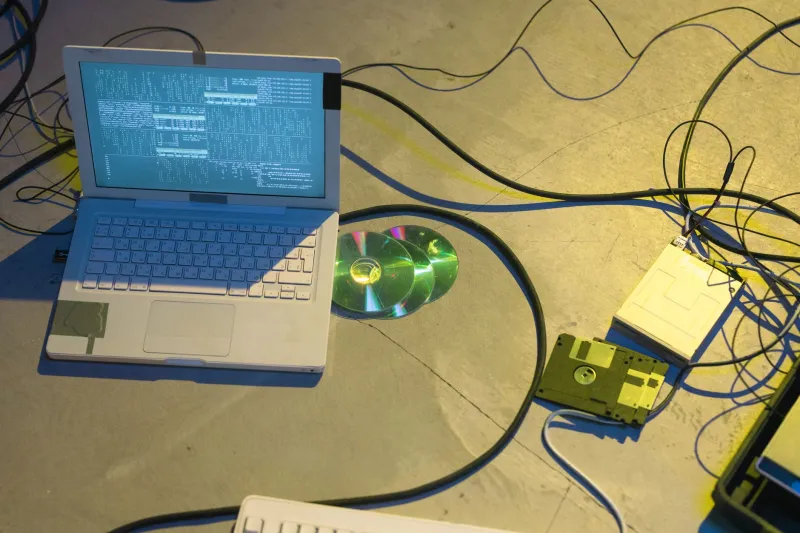
There is a particular quality to the decisions made at 2 a.m. during an imaging run. They are confident, rapid, and almost uniformly wrong.
An autofocus routine stalls and the operator, rather than letting the sequence fail cleanly, opens the focus module and manually nudges the step size. A cable snags on the declination axis and the response is to hand-slew the mount back to the target without checking whether the guider has recovered. A meridian flip fails and the next four hours of exposures are taken of the inside of the observatory wall.
The gear was not the problem. The design was. A rig that requires a competent human at 2 a.m. is a rig that will underperform, because the competent human stopped being available somewhere around midnight.
The Myth of the Hero Session
Amateur astrophotography has a persistent folk culture of the marathon night: set up at dusk, image until dawn, catch a nap in a lawn chair, produce nine hours of integration by sunrise. It is a genuinely impressive thing to do once. As a repeatable workflow, it fails — and it fails specifically on the nights that matter most, when a long, clear, moonless window coincides with the end of a workweek.
Compounding the problem is the temptation to troubleshoot in real time. Every intervention carries risk, and the risk is highest precisely when judgment is lowest. The sensible posture is not vigilance. It is redundancy.
The Failure Modes, Ranked
After enough failed nights, the causes sort themselves by frequency and cost.
- Cables. Snags on the RA or Dec axis, strain at the connector, a USB run that works at 20°C and drops at 2°C. Cable failures account for more lost data than optics, electronics, or weather.
- Power. A brief mains blink resets the mini-PC and everything downstream; a battery sags as the temperature drops; a 12-volt connector works loose.
- Dew. The corrector fogs at midnight and every subsequent sub is ruined without a single error message.
- Meridian flips. The plate solve fails, the guiding does not resume, and the sequence continues cheerfully with no signal.
- Software. A driver hang, a memory leak, an update that installed itself at the wrong moment.
- Focus drift. Temperature falls eight degrees over six hours and nobody refocuses.
- The operator. Every manual intervention not listed above.
The Two-Button Rule
A useful design constraint: any task that might need to be performed between midnight and dawn should require two buttons or fewer, or should be automated entirely. If the answer is “open the application, navigate to the module, adjust the parameter, restart the sequence,” that task is not a workflow, it is an experiment.
Practically, this means moving everything except exception handling out of the live session and into the sequence plan. Refocus on every filter change and on a two-degree temperature delta. Re-center on a plate solve after every flip. Dither with settle parameters that tolerate a mediocre guide star. Park and warm the camera at the end. None of this requires a human.
Fail-Safes That Cost Almost Nothing
The highest-return investments are rarely the expensive ones.
Cable management. Route everything through the mount with a single moving bundle, add a service loop at each axis, and use strain relief at every connector. The goal is that no cable is ever in tension during a slew. This is an hour of work with Velcro and zip ties that will prevent a category of failure no software can detect.
A powered hub on the tube. Placing the USB hub on the optical tube rather than at the base shortens every cable run and eliminates most intermittent-connection problems.
A fused 12-volt distribution block. Individual fusing means one short does not take down the entire system, and labeled ports mean a 2 a.m. diagnosis becomes a glance.
A dew controller with a thermistor. The common failure is leaving the heater at a fixed setting that is too low for the conditions. A controller with a temperature probe manages that automatically.
Restore-on-power-loss. A BIOS setting on most mini-PCs, and a UPS or a modest battery in front of the mains supply. Combined with a sequence that resets on power-up, a two-second outage becomes a two-minute interruption rather than a lost night.
A remote power switch. The ability to cycle a hung machine without physically visiting it converts a lost night into a lost twenty minutes.
An end-of-sequence shutdown script. Park the mount, disable the dew heater, warm the camera, and shut down. If you fall asleep, nothing is left straining until dawn.
Test It in Daylight
The most valuable hour in the entire workflow is the one spent deliberately breaking things before the stars come out. Trigger a simulated power loss. Unplug a USB cable and see whether the software recovers or simply hangs. Force a plate-solve failure and confirm that the sequence stops cleanly rather than continuing to expose. Read the logfile your capture software produced and check whether it tells you what happened.
Every one of these tests is dull. Every one of them is worth more than another filter.
Sleep Is a Calibration Tool
The uncomfortable conclusion is that the operator is a component of the imaging system, with its own performance envelope, and that envelope degrades substantially after 1 a.m. Trying to out-discipline that fact is not dedication. It is poor engineering.
The alternative is to spend one evening per month designing and testing the workflow, and then to let it run — asleep, unobserved, and with enough logging to reconstruct what happened in the morning. The rig that survives 2 a.m. is not the one with the best optics. It is the one that was designed by someone who knew they would not be there.