The Quiet Revolution Beneath Your Sensor: How Modern Read Noise Is Rewriting Detection Limits
The aperture gospel has governed amateur astrophotography for decades. Collect more light, the logic goes, and you detect fainter objects. Larger mirrors gather more photons per unit time, overwhelm the noise floor more quickly, and push the detection limit deeper into the cosmos. This principle is sound physics, and it remains true in absolute terms. What has changed — dramatically, in the past ten years — is the noise floor itself.
Modern consumer and prosumer camera sensors have achieved read noise figures that would have been remarkable in a scientific instrument a generation ago. The practical consequence is that a well-chosen contemporary camera with a modest four-inch refractor can, under the right conditions, reach detection depths that previously demanded apertures two or three times larger. This is not marketing language. It is a measurable, reproducible result of semiconductor engineering that every serious amateur imager should understand.
What Read Noise Actually Means
Every time a digital camera reads the charge accumulated in a pixel, the readout electronics introduce a small, random error. This error — read noise — is expressed in electrons (e⁻) and represents a fundamental floor below which no signal can be reliably distinguished from instrument artifact.
In the era of CCD dominance, read noise figures of 5–10 e⁻ were typical for consumer-grade sensors. Scientific cooled CCDs achieved 3–5 e⁻ at considerable cost. The implication was significant: faint objects whose signal contributed only a few electrons per pixel per exposure were effectively invisible below the noise floor, no matter how many sub-exposures were stacked.
The emergence of back-illuminated CMOS (BI-CMOS) architecture changed this calculus. By relocating the wiring layer beneath the photodiode rather than in front of it, back-illuminated sensors simultaneously improved quantum efficiency and reduced the electronic noise introduced during readout. Contemporary dedicated astronomy cameras — and even some mirrorless cameras designed for general photography — now routinely achieve read noise figures below 2 e⁻, with some sensors measuring below 1 e⁻ at unity gain settings.
To appreciate what this means in practice: a sensor with 1.0 e⁻ read noise introduces roughly one-fifth the noise floor of a 5 e⁻ CCD. In signal-to-noise terms, this is equivalent to collecting approximately twenty-five times more signal with the older sensor. The aperture required to achieve that signal gain would be enormous.
The Science Behind the Improvement
Three specific developments have driven read noise reduction in modern sensors:
Back-side illumination (BSI) eliminates the physical obstruction of metal interconnects in the photon path, improving fill factor and reducing capacitive coupling noise.
On-chip amplifier refinements have reduced the contribution of thermal and flicker noise in the source-follower transistors that amplify pixel charge before analog-to-digital conversion. This is where much of the historical 3–5 e⁻ noise floor originated.
High-conversion-gain modes allow modern sensors to operate at amplification settings where a single photoelectron produces a sufficiently large voltage swing to be resolved above the electronic noise floor — effectively enabling single-photon sensitivity in individual pixels.
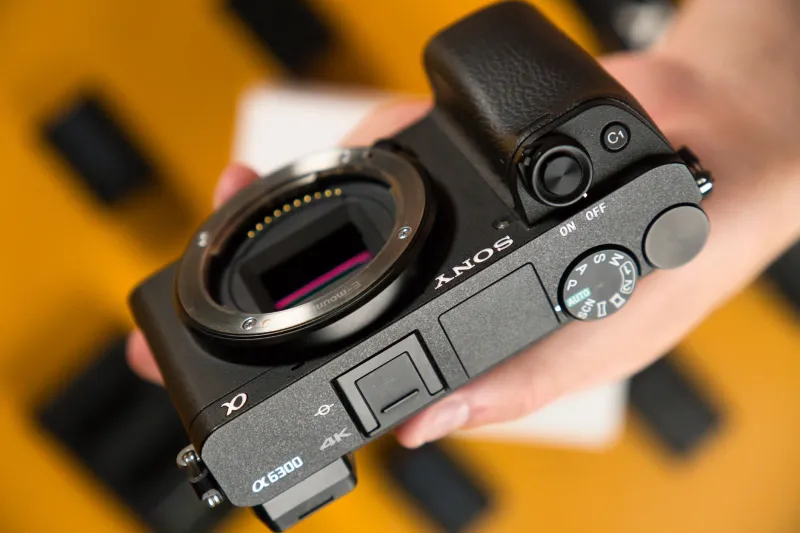
The Sony IMX series of back-illuminated sensors, which powers a substantial portion of the current dedicated astronomy camera market as well as numerous mirrorless cameras, exemplifies this progression. The IMX571 sensor, used in several popular astronomy cameras retailing below $1,500, achieves read noise below 1.5 e⁻ at moderate gain settings — a figure that would have been publishable in a scientific instrumentation paper in 2005.
Older vs. New-Generation Performance: A Practical Comparison
Consider a concrete scenario: imaging the faint outer halo of a large elliptical galaxy at a surface brightness of approximately 27 magnitudes per square arcsecond — a genuinely challenging target that reveals tidal streams and shell structures of cosmological interest.
With a first-generation one-shot-color CMOS camera producing 6 e⁻ read noise, reaching a signal-to-noise ratio of 5 in the faintest regions requires a substantial total integration time under dark skies. The read noise contribution dominates in short sub-exposures, forcing the imager toward longer individual frames to build signal above the floor.
With a current-generation back-illuminated sensor at 1.2 e⁻ read noise, the same SNR target becomes achievable in a fraction of the integration time. More practically, it becomes accessible with shorter individual sub-exposures — which in turn reduces the impact of tracking errors, satellite trails, and atmospheric variability on individual frames. The stack benefits not just from lower noise but from greater flexibility in data collection strategy.
For observers using telescopes in the 80–100mm aperture range — a substantial portion of the American astrophotography community — this difference is not marginal. It is the difference between a target being viable and being inaccessible.
Maximizing These Gains Without Replacing Your Entire Setup
The benefits of modern sensor technology are not automatically realized. Several practical steps determine whether an imager captures the full advantage of a low-noise sensor:
Select the appropriate gain setting. Most modern astronomy cameras offer multiple gain modes. Unity gain — where one analog-to-digital unit corresponds to one electron — is often the optimal starting point for deep-sky work, but many sensors achieve their lowest read noise at slightly elevated gain. Consult published sensor characterization data, not just the manufacturer's recommended settings.
Calibrate aggressively. Low read noise sensors reveal calibration errors that higher-noise cameras would obscure. Flat frames must be high-signal (aim for 30–50% of full well capacity), and bias frames should be replaced by offset-subtracted darks where possible. The cleaner the calibration library, the more fully the sensor's noise floor advantage is realized in the final stack.
Reconsider sub-exposure length. With read noise below 2 e⁻, the sky background — even from a dark site — dominates the noise budget in exposures of 60–120 seconds or longer. This means that the traditional deep-sky imperative to maximize individual sub-exposure length is less critical than it once was. Many imagers with modern sensors achieve equivalent or superior results with large numbers of shorter sub-exposures, which simplifies acquisition and reduces the penalty of individual rejected frames.
Cooling remains valuable but is less critical than before. Thermal dark current, which cooling suppresses, contributes independently of read noise. At moderate temperatures (10–15°C), dark current in modern CMOS sensors is low enough that uncooled imaging of targets requiring less than two hours of total integration is often viable. For longer projects, cooling still provides a meaningful benefit.
The Democratization of Depth
The implications of this shift extend beyond individual imaging sessions. Detection limits that once required institutional resources — a 16-inch telescope on a research-grade mount at a dark-sky site — are now approachable by a careful amateur with a quality four-inch refractor, a modern sensor, and a suburban backyard with occasional access to darker skies.
This does not mean that aperture is irrelevant. Larger apertures collect more photons per unit time, and for the faintest targets under the worst conditions, that advantage remains decisive. But the threshold at which a given aperture becomes useful has shifted substantially downward. The noise floor that once defined the practical limits of amateur detection has been lowered by engineering — and the universe that lies just below it is now within reach of far more observers than it has ever been before.