Choosing the Right Filter: A Practical Guide to Narrowband, Broadband, and Specialty Options for Deep-Sky Imagers
Among the purchases that shape a deep-sky imaging setup, filters occupy a peculiar position. They are neither the most expensive line item nor the most glamorous, yet few decisions have a more direct impact on what your final image looks like—or how difficult it is to get there. The filter you attach between your telescope and camera determines which wavelengths of light reach your sensor, how effectively your setup handles light pollution, and how many hours of integration time your target will demand before a usable result emerges.
Despite this outsized influence, filter selection rarely receives the rigorous attention that mount choice or camera sensor comparisons attract. This guide aims to close that gap by examining the major filter categories available to amateur imagers in 2025, with honest attention to cost, workflow implications, and the types of targets where each option genuinely earns its place in the kit.
The Fundamental Division: What Are You Trying to Block?
Every imaging filter operates on the same basic principle: it transmits certain wavelengths of light while blocking others. The strategic question is which wavelengths matter for your target and which represent noise—whether from light pollution, airglow, moonlight, or the natural sky background.
Broadband filters, including standard LRGB (luminance, red, green, blue) filter sets, transmit wide swaths of the visible spectrum. Narrowband filters—most commonly hydrogen-alpha (Hα), oxygen-III (OIII), and sulfur-II (SII)—transmit extremely narrow bandwidths, typically between 3 and 7 nanometers, centered on the emission lines produced by specific ionized gases. Specialty filters, such as UHC (ultra-high contrast), dual-narrowband, and emerging quad-narrowband options, occupy various positions between these poles.
LRGB and Broadband Imaging: The Full-Spectrum Approach
For galaxies, star clusters, and reflection nebulae—targets that emit or reflect light across a broad range of wavelengths—LRGB imaging remains the most natural and often the most scientifically faithful approach. These targets do not produce strong discrete emission lines, so narrowband filters would capture very little useful signal from them.
A quality LRGB set from a reputable manufacturer such as Chroma, Astronomik, or Baader will typically run between $400 and $900 for a matched set in standard sizes. The tradeoff is sensitivity to light pollution: broadband filters do not discriminate against the sodium or LED wavelengths that flood suburban skies, which means that from a Bortle 6 or 7 site, integration times for faint galaxy targets can stretch to uncomfortable lengths before the sky gradient overwhelms the signal.
For imagers with access to genuinely dark skies—a Bortle 3 or 4 site within a few hours of major US population centers remains achievable in many western states—LRGB imaging of galaxies and reflection nebulae produces color rendition that narrowband approaches simply cannot replicate.
Hydrogen-Alpha: The Workhorse of Emission Nebula Imaging
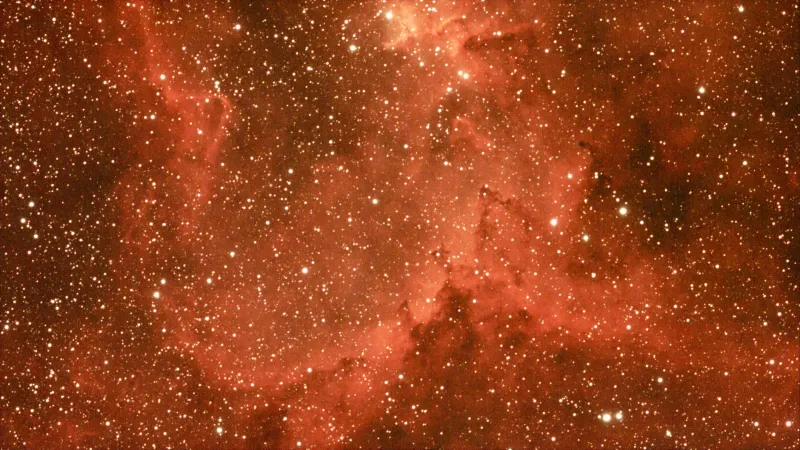
Hα filters have become, for many deep-sky imagers, the single most transformative piece of glass in the kit. The 656.3 nm hydrogen-alpha emission line is the dominant signal source for the vast majority of emission nebulae, and a quality 3 nm or 5 nm Hα filter can render targets that are nearly invisible from suburban skies in full, dramatic detail.
The practical benefit is substantial. Because the filter blocks virtually all light that does not fall precisely on the Hα wavelength, light pollution—which emits broadly across the spectrum—is reduced to a manageable background level. Imagers in the Los Angeles basin or the Chicago suburbs have produced genuinely impressive Hα data that would be unachievable with broadband filters under the same conditions.
Cost ranges widely. Entry-level Hα filters from manufacturers such as Optolong or Svbony are available in the $80–$200 range for 2-inch formats, while premium options from Chroma or Astrodon can exceed $400 for the same size. The premium is not merely marketing: better-quality filters exhibit flatter bandpass profiles, more consistent transmission across the filter surface, and less internal reflection—all of which matter when you are integrating dozens of hours of data.
OIII and SII: Completing the Narrowband Palette
Oxygen-III (500.7 nm) and sulfur-II (672 nm) filters complete what is often called the Hubble palette—the SHO (SII, Hα, OIII) color mapping made famous by the Hubble Space Telescope's iconic images of objects such as the Pillars of Creation. Mapping SII to red, Hα to green, and OIII to blue produces the distinctive teal-and-gold color palette that has become closely associated with high-end amateur nebula imaging.
OIII is generally the second most useful narrowband filter after Hα, as many emission nebulae—particularly planetary nebulae and supernova remnants such as the Veil Nebula complex—emit strongly in this wavelength. SII signal tends to be weaker in most targets, requiring longer integration times to achieve comparable signal-to-noise ratios.
The post-processing demands of SHO imaging are considerably greater than those of single-filter or LRGB work. Combining three narrowband channels into a coherent, aesthetically pleasing false-color image requires familiarity with channel mixing, selective hue adjustments, and star color management techniques. Imagers who underestimate this processing overhead often find the results disappointing despite excellent raw data.
UHC and Dual-Narrowband Filters: The Compromise Option
UHC (ultra-high contrast) filters transmit both the Hα and OIII emission lines while blocking the intervening spectrum. They represent a practical compromise for visual observers and entry-level imagers who want meaningful light pollution rejection without committing to a full narrowband set.
Dual-narrowband filters—products such as the Optolong L-eNhance and L-eXtreme, or the Antlia ALP-T—have gained significant traction in recent years, particularly among imagers using one-shot color (OSC) cameras. By transmitting only the Hα and OIII wavelengths, these filters allow a color camera to capture narrowband-quality data in a single imaging run, with the two wavelengths mapped to the camera's color channels during processing.
The tradeoff is reduced flexibility. The color palette available from a dual-narrowband OSC capture is constrained compared to a full three-filter SHO workflow with a monochrome camera, and star colors are significantly altered—often requiring dedicated RGB star data to restore natural hues in the final image.
Building a Filter Strategy Around Your Situation
The most important question is not which filter is objectively best, but which filter best matches your sky conditions, your target list, and your processing willingness.
Imagers at dark sites with a primary interest in galaxies and clusters are well served by a quality LRGB set. Those shooting from suburban or urban locations with a focus on emission nebulae will find that a 5 nm or 7 nm Hα filter delivers the most immediate improvement per dollar spent. Imagers who want to pursue the full narrowband palette should budget not just for the filters themselves but for the additional integration time and processing complexity that SHO work demands.
Filter quality scales meaningfully with price in this category—more so than in many other areas of astrophotography equipment. The recommendation here is consistent: buy the best filter you can afford for your primary use case, rather than a full set of mediocre filters that cover every scenario inadequately.