Alone Under the Stars: The Emotional Landscape of the Dedicated Astrophotographer
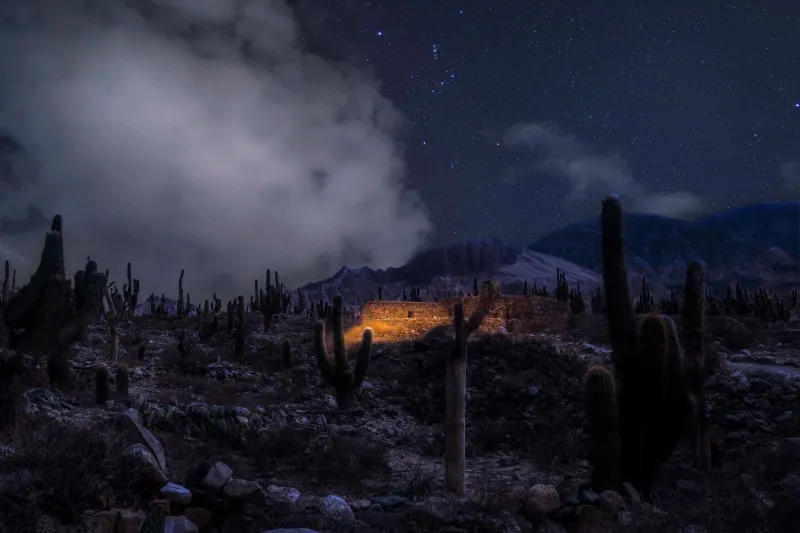
It is two in the morning somewhere in the high desert of New Mexico. The mount is tracking. The dew heater is doing its job. The sky is a Bortle 2 cathedral, and the Milky Way arches overhead with an intensity that still, after years of sessions exactly like this one, refuses to become ordinary. By every external measure, this is the ideal night.
And yet the photographer sitting beside the equipment is cycling through a familiar internal weather system: the low-grade anxiety of wondering whether the collimation is holding, the background hum of accumulated fatigue from months of cloudy weekends, and the persistent, nagging awareness that someone on a popular astrophotography forum posted an image of this exact target last week that was, honestly, better.
This is astrophotography as it is actually experienced—not as it appears in the polished final image, and not as the hobby is typically described to newcomers. It is a pursuit that demands extraordinary patience, tolerates failure with bureaucratic consistency, and places its practitioners in conditions of genuine isolation. It also, for reasons that deserve careful examination, tends to produce some of the most tenacious, observant, and quietly resilient people in any amateur science community.
The Particular Loneliness of the Long Session
Solo night sessions have a quality of solitude that differs from ordinary aloneness. The world is not merely quiet; it has, in a very real sense, gone elsewhere. Neighbors sleep. Cities dim. The only sounds are the cooling tick of equipment, the occasional movement of nocturnal animals, and whatever is playing through earbuds at low volume to keep the mind company.
For some practitioners, this solitude is the point. The session becomes a form of enforced stillness in a culture that rarely permits it—a scheduled appointment with one's own thoughts, uncomplicated by the obligations of daytime life. Many astrophotographers describe night sessions in language that edges toward the meditative: a suspension of ordinary time, a recalibration of perspective that only the scale of the visible universe can reliably provide.
For others, the isolation accumulates differently. The hobby is not easily shared with casual observers. A partner who gamely accompanies you to a dark site once will not necessarily find the second trip equally compelling. Friends who express enthusiasm for the images rarely express equal enthusiasm for the four-hour round trip and the 3 a.m. packdown that produced them. This asymmetry—between the visible product and the invisible labor—can breed a quiet sense of disconnection from the people who matter most.
Acknowledging this tension is not a criticism of the hobby. It is an honest accounting of what it asks.
Weather as a Teacher of Tolerance
No external force shapes the astrophotographer's psychology more thoroughly than weather. A meticulously planned imaging trip to Cherry Springs State Park in Pennsylvania can be neutralized by a cloud deck that arrives twelve hours ahead of schedule and lingers for three days. A year's worth of planning around a specific planetary opposition can yield exactly one usable night of data before the jet stream reasserts itself.
The cumulative effect of weather-related failure is something that astrophotographers rarely discuss openly, perhaps because it sounds like complaining about a hobby they chose freely. But the psychological weight of repeated deferrals is real. Motivation erodes. Equipment sits unused. The gap between the image you envisioned and the data you were actually permitted to collect widens into something that can feel, in low moments, like a permanent condition.
What many experienced practitioners report, however, is that weather eventually becomes a teacher rather than an adversary. The imager who has lost a dozen planned sessions to clouds develops a relationship with meteorological uncertainty that most people never encounter: a practiced acceptance of conditions entirely outside personal control, combined with a heightened appreciation for the nights that do cooperate. This is not a trivial psychological development. It is, in the language of contemporary resilience research, a genuine tolerance for ambiguity—a capacity that transfers well beyond the telescope.
Social Media and the Comparison Trap
The astrophotography community's online presence is, by any reasonable measure, extraordinary. Platforms such as Astrobin, dedicated subreddits, and Instagram accounts maintained by world-class imagers provide a constant stream of images that represent the absolute ceiling of what the hobby can produce. For newer practitioners, and for experienced ones on difficult nights, this stream can function less as inspiration than as a relentless benchmark.
The comparison trap in astrophotography has specific characteristics that distinguish it from the more general social media problem. The images being compared are not filtered vacation photographs or curated lifestyle content—they are the products of genuine skill, expensive equipment, and hundreds of hours of careful work. When a beginner compares their first attempt at the Andromeda Galaxy to an image produced by a retired engineer with a $20,000 setup and fifteen years of processing experience, the comparison is not merely unfair. It is categorically meaningless. But it does not always feel that way at midnight, alone with a laptop and a screen full of masterworks.
The remedy most commonly offered—compare yourself only to your previous work—is correct but incomplete. It helps to also develop an honest understanding of what the top-tier images in the community actually represent in terms of investment, time, and cumulative experience. They are not the standard. They are the horizon: visible, instructive, and permanently in motion.
What Keeps People Coming Back
Given all of this—the isolation, the weather, the failure rates, the social comparison—the persistence of astrophotography as a hobby demands some explanation.
Part of the answer is the images themselves. There is a specific category of satisfaction available to the person who has converted hundreds of hours of photons into a finished photograph of a galaxy 50 million light-years distant. It is not the satisfaction of purchasing something or consuming something. It is the satisfaction of making something—something that did not exist until you decided it should, and that required every skill you have developed to produce.
But another part of the answer is less tangible. The night sky, experienced repeatedly and with attention, does something to a person's sense of proportion. The problems that felt urgent at sunset rarely survive contact with a two-hour exposure of the Virgo Cluster. This is not escapism—it is perspective, earned through presence and patience rather than purchased or performed.
Astrophotography is, at its core, a practice of sustained attention in conditions that reward nothing less. That is why it is difficult. It is also, for those who remain with it, why it endures.