Low on the Horizon: The Deep-Sky Targets American Observers Routinely Ignore
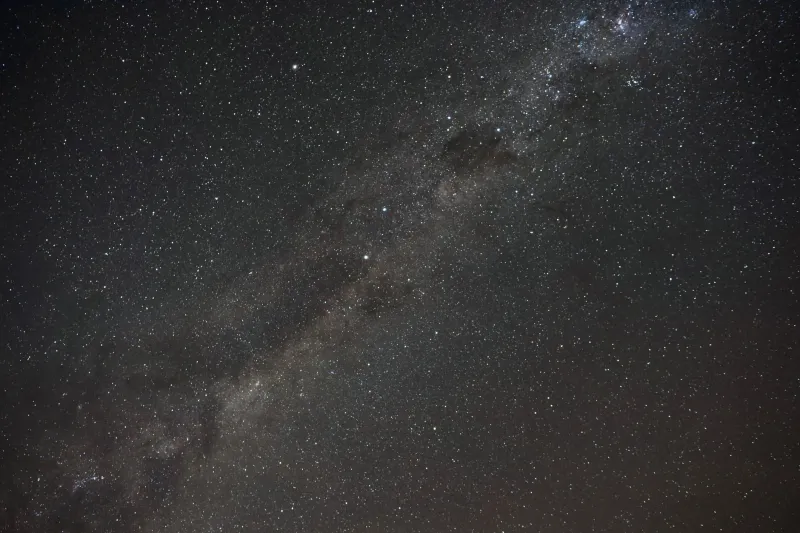
Open any popular American astronomy guide and you will find the same objects repeated with reassuring consistency: the Orion Nebula, the Andromeda Galaxy, the Pleiades, the Virgo Cluster. These are magnificent targets, and their prominence in the literature is entirely deserved. But the emphasis on them — and on the broader northern-sky catalog from which they are drawn — has created a collective blind spot that affects a significant portion of the American amateur astronomy community.
The United States spans from roughly 25 to 49 degrees north latitude. That range is wide enough to make a substantial difference in what is accessible from the southern tier of the country versus the northern tier. Observers in Brownsville, Texas, at 26°N, share a sky that has more in common with observers in central Mexico than with observers in Minneapolis. Yet the targets they pursue, the guides they consult, and the community norms they absorb are largely calibrated for mid-northern latitudes.
The result is a catalog of neglected objects — some scientifically significant, many visually stunning — that American imagers routinely overlook simply because the culture of the hobby has not pointed them southward.
Why the Bias Exists
The northern-hemisphere skew in amateur astronomy literature is not a conspiracy. It reflects demographics. The majority of the world's amateur astronomers live in Europe and the northern United States, and the most influential historical observatories — including those that produced the foundational visual deep-sky catalogs — were located at mid-northern latitudes. Charles Messier worked from Paris. The NGC was compiled largely from observations made in England and Ireland. The objects that populate entry-level astronomy guides are, in a real sense, the objects that were easiest to observe from the places where the hobby's foundational texts were written.
For observers in the American South, however, this history creates an unnecessary constraint. The celestial equator passes through some of the most photon-rich regions of the sky, and the southern sky contains objects of extraordinary scientific and aesthetic interest.
Targets Worth Pursuing: A Latitude-Specific Survey
From Florida and South Texas (25°N–30°N)
At these latitudes, the southern sky opens meaningfully. The Sculptor Galaxy (NGC 253), often called the Silver Dollar Galaxy, reaches a usable altitude in autumn and is one of the most structurally detailed edge-on spirals accessible to amateur imagers anywhere. Its dust lanes and star-forming regions reward even modest apertures. From Gainesville, Florida, NGC 253 can reach nearly 30 degrees of altitude at transit — sufficient for productive imaging with appropriate atmospheric correction.
The Fornax Galaxy Cluster, centered around NGC 1399, is another autumn prize. Less celebrated than the Virgo Cluster but scientifically rich, Fornax contains a population of elliptical galaxies at a distance of roughly 62 million light-years and offers wide-field imaging opportunities that few American observers have explored.
For those willing to push into late spring, Omega Centauri (NGC 5139) is perhaps the single most dramatic object available to southern US observers that northern counterparts cannot access meaningfully. The largest globular cluster associated with the Milky Way, it contains an estimated ten million stars and subtends nearly an hour of arc in angular diameter. From the Florida Keys or the lower Rio Grande Valley, it can reach 20–25 degrees of altitude — low, yes, but entirely imageable with careful atmospheric compensation.
From the Gulf Coast and Desert Southwest (30°N–35°N)
Observers in this band, including those in the dark-sky regions of west Texas and southern New Mexico, occupy a particularly privileged position. The McDonald Observatory sits at roughly 30.7°N, and the surrounding region offers some of the finest dark skies in the continental United States combined with access to equatorial targets.
The Centaurus A radio galaxy (NGC 5128) is accessible from this band in spring and early summer. One of the nearest active galactic nuclei to Earth and a powerful radio source, it presents as a peculiar elliptical galaxy bisected by a striking dust lane — a visually distinctive target that carries genuine scientific interest. Its low declination of approximately -43 degrees means it never rises high from the continental US, but from west Texas it clears the horizon sufficiently for dedicated imaging.
The Eta Carinae Nebula (NGC 3372), one of the largest emission nebulae in the sky and home to one of the most massive and luminous stars known, technically grazes the horizon from the extreme southern US. For observers near the Mexican border at 26°N, it can reach 10–12 degrees of altitude during transit — marginal but not impossible for narrowband hydrogen-alpha work, where atmospheric extinction is less penalizing than in broadband.
Seasonal Windows and Planning Considerations
For American observers pursuing these targets, seasonal timing is critical. Southern and equatorial objects are best pursued when they transit near midnight — which, for most of the targets described above, occurs in the autumn and spring months.
Atmospheric extinction at low altitudes is the primary challenge. A target at 15 degrees of elevation is passing through roughly four times the atmosphere as one at the zenith. For broadband LRGB imaging, this translates to significant color distortion and reduced signal-to-noise performance. Narrowband imaging — particularly hydrogen-alpha — is considerably more forgiving, and many of the southern emission nebulae reward exactly this approach.
Software tools including Stellarium and SkySafari allow observers to calculate precise transit times and maximum altitudes for any target at any US location. Building a planning spreadsheet that filters targets by minimum altitude threshold (typically 15–20 degrees for serious imaging) is a practical first step.
The Case for Expanding Your Catalog
Beyond the practical rewards of adding new targets to a project list, there is a scientific argument for pursuing these objects. Many southern and equatorial deep-sky objects are underrepresented in amateur imaging databases precisely because fewer observers attempt them. High-quality amateur images of NGC 5128, the Fornax Cluster, or the outer halo of Omega Centauri have genuine scientific value as records of morphological detail and, in some cases, as contributions to variable-star and transient-detection programs.
The American South is not a compromise for observers who cannot access better latitudes. For the targets described here, it is a privileged position — one that a hemisphere-biased hobby has not yet fully recognized.