CelestialFrame
Capture the Universe, One Frame at a Time

CelestialFrame

Capture the Universe, One Frame at a Time

Latest Articles

Nothing Wasted: Extracting Scientific Value from Imaging Sessions You Were Ready to Delete
Technology & Technique

Nothing Wasted: Extracting Scientific Value from Imaging Sessions You Were Ready to Delete

A ruined imaging session is rarely as worthless as it appears in the frustrating hours after dawn. This advanced guide examines the methodologies — borrowed from professional observational astronomy — that allow amateur imagers to extract scientifically meaningful data from nights compromised by tracking failures, focus drift, and turbulent seeing. The difference between discarded data and recovered data is often a matter of diagnostic honesty and processing strategy, not the quality of the orig

Oct 06, 2026

Aligned or Deceived: How Collimation Tools — Not Technique — Define Your Telescope's True Potential
Technology & Technique

Aligned or Deceived: How Collimation Tools — Not Technique — Define Your Telescope's True Potential

Most amateur astronomers spend years refining their collimation technique while neglecting the instruments that make accurate collimation possible in the first place. This guide examines how the right collimation tools — chosen deliberately for your telescope design — can rescue image quality that no amount of processing skill will ever recover. A diagnostic framework helps you determine whether collimation, not optics or atmosphere, is quietly limiting every frame you capture.

Oct 06, 2026

Honest Targets: Matching Deep-Sky Objects to Your Aperture, Location, and the Sky You Actually Have
Observation Guides & Travel

Honest Targets: Matching Deep-Sky Objects to Your Aperture, Location, and the Sky You Actually Have

The most popular deep-sky targets in astrophotography are not always the most appropriate ones for your specific telescope, location, and sky conditions. This guide moves beyond generic object lists to provide a practical, regionally calibrated framework for US observers — one that honestly addresses the tension between what looks spectacular on the internet and what your backyard sky can actually deliver. A decision matrix helps match seasonal targets to aperture size and Bortle class so that y

Oct 06, 2026

Filtering Your Way to Better Skies: A Practical Guide to Choosing the Right Optical Filters for Every Target and Budget
Observation Guides & Travel

Filtering Your Way to Better Skies: A Practical Guide to Choosing the Right Optical Filters for Every Target and Budget

The filter market for astrophotography has never been more diverse — or more confusing. Hydrogen-alpha, oxygen-III, sulfur-II, luminance, broadband light pollution filters, and a growing range of photometric options each occupy a distinct niche, and choosing incorrectly can mean spending hundreds of dollars on glass that actively works against your imaging goals. This guide cuts through the acronyms and marketing language to match filter types to real-world targets, telescope setups, and realist

Sep 29, 2026

When the Stack Collapses: Diagnosing the Processing Mistakes That Quietly Destroy Deep-Sky Images
Technology & Technique

When the Stack Collapses: Diagnosing the Processing Mistakes That Quietly Destroy Deep-Sky Images

A beautifully collected night of data can be irreversibly damaged in the hour spent stacking it at home — and most astrophotographers never realize the stack itself is the culprit. From rejection algorithms applied too aggressively to alignment errors that compound across hundreds of frames, the decisions made during integration carry consequences that no amount of subsequent processing can undo. This troubleshooting guide helps you identify exactly where your workflow is failing.

Sep 29, 2026

Slow Down to See More: The Counterintuitive Truth About Camera Speed in Deep-Sky Imaging
Technology & Technique

Slow Down to See More: The Counterintuitive Truth About Camera Speed in Deep-Sky Imaging

High frame rates and rapid readout speeds dominate the marketing conversation around modern astronomical cameras, but the physics of deep-sky imaging tell a more complicated story. Understanding how readout noise, thermal stability, and integration time interact reveals why the fastest camera on the market may not be the right tool for capturing faint nebulae or distant galaxies. This guide cuts through the spec-sheet noise to help you make a genuinely informed decision.

Sep 29, 2026

Signal Archaeology: Advanced Techniques for Recovering Faint Astronomical Objects Without Corrupting the Data
Technology & Technique

Signal Archaeology: Advanced Techniques for Recovering Faint Astronomical Objects Without Corrupting the Data

Buried beneath the noise floor of every astrophotography dataset lies genuine astronomical signal — faint galaxy halos, dim nebular filaments, and the outer reaches of star clusters that standard processing workflows leave behind. Recovering that signal without introducing artifacts or misrepresenting the underlying physics requires a disciplined, non-destructive approach grounded in an understanding of how noise, deconvolution, and wavelet decomposition actually behave. This technical guide lay

Sep 23, 2026

The Waiting Game: How Strategic Patience Outperforms a Gear Upgrade Every Time
Observation Guides & Travel

The Waiting Game: How Strategic Patience Outperforms a Gear Upgrade Every Time

The astrophotography community spends enormous energy debating aperture, sensor size, and mount payload capacity — yet some of the most celebrated amateur images in recent years were captured on modest equipment by observers who simply waited longer and planned more carefully. This piece makes the case that knowing when to image, and having the discipline to hold off until conditions align, is a more powerful variable than almost any hardware upgrade a budget can provide.

Sep 23, 2026

Heat Is the Enemy: Understanding and Eliminating Thermal Gradients in Your Imaging Setup
Technology & Technique

Heat Is the Enemy: Understanding and Eliminating Thermal Gradients in Your Imaging Setup

Long before you press the shutter, invisible rivers of warm and cool air may already be conspiring to rob your images of resolution and contrast. Thermal gradients inside telescopes, camera housings, and observatories are among the most underdiagnosed sources of image degradation in amateur astrophotography. This guide walks through the physics of the problem, the diagnostic tools available to every imager, and the practical strategies that can reclaim the sharpness your optics were designed to

Sep 23, 2026

Light Decoded: How Amateur Astronomers Are Reading the Chemical Signatures of Stars and Nebulae
Technology & Technique

Light Decoded: How Amateur Astronomers Are Reading the Chemical Signatures of Stars and Nebulae

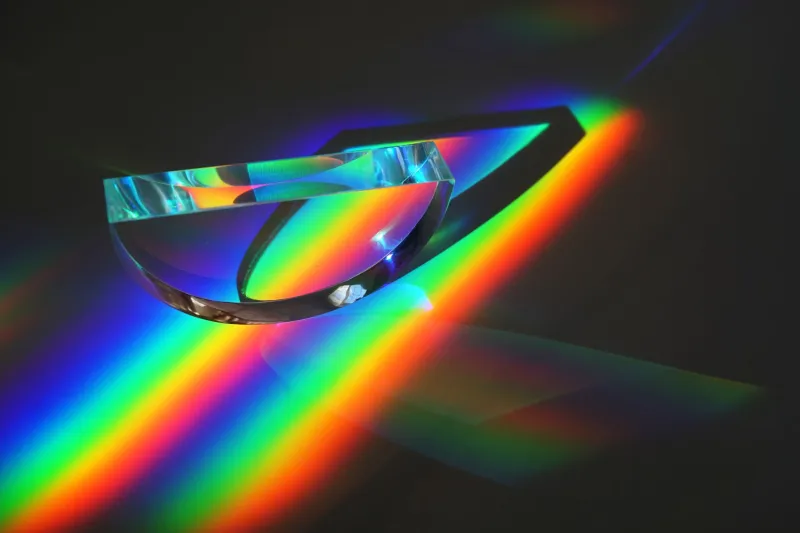
Every beam of starlight carries a hidden transcript of the physics and chemistry occurring millions of miles away. Through spectroscopy—the art of splitting that light into its constituent wavelengths—amateur astronomers can identify the elemental composition of stars, measure their radial velocities, and contribute observations that complement professional research programs. The equipment required is more accessible than most enthusiasts realize.

Aug 15, 2026

The Mount Is the Message: Why Tracking Precision Trumps Aperture in Astrophotography
Technology & Technique

The Mount Is the Message: Why Tracking Precision Trumps Aperture in Astrophotography

Before you spend another dollar on a larger objective, consider what your mount is quietly doing to every frame you capture. Tracking errors, polar alignment drift, and periodic error are responsible for more lost data than any optical limitation. Mastering the mechanics beneath your telescope may be the single highest-return investment you can make as an astrophotographer.

Aug 15, 2026

Calibrating the Dark: How Flat Frames Protect Every Photon You Collect
Technology & Technique

Calibrating the Dark: How Flat Frames Protect Every Photon You Collect

Among the calibration frames that astrophotographers routinely skip or misapply, the flat field stands apart for its outsized impact on final image quality. Vignetting, sensor dust, and optical gradients silently corrupt raw data in ways that no amount of post-processing can fully repair after the fact. Understanding why flat frames work—and how to capture them correctly—is one of the most consequential technical skills an imager can develop.

Aug 15, 2026

More Glass, Fewer Skills: Why Chasing the Next Telescope Is Quietly Sabotaging Your Growth as an Astronomer
Technology & Technique

More Glass, Fewer Skills: Why Chasing the Next Telescope Is Quietly Sabotaging Your Growth as an Astronomer

The astrophotography community has long celebrated the pursuit of better equipment, yet veteran observers warn that the relentless upgrade cycle may be the single greatest obstacle to genuine skill development. Before reaching for your credit card, consider what mastery of your current setup might reveal that no new telescope ever could. This investigation examines the psychology, economics, and hidden costs of gear obsession — and offers a more deliberate path forward.

Jul 22, 2026

Color Fringing at the Eyepiece: Understanding and Defeating Atmospheric Dispersion in Planetary Imaging
Technology & Technique

Color Fringing at the Eyepiece: Understanding and Defeating Atmospheric Dispersion in Planetary Imaging

Every planetary imager has encountered it: a crisp Jupiter or Saturn frame undermined by a telltale rainbow fringe along the planet's limb. Atmospheric dispersion is one of the most persistent optical adversaries in planetary astrophotography, yet it remains poorly understood by many imagers. This guide breaks down the physics behind the phenomenon and offers concrete, field-tested strategies to eliminate it.

Jul 22, 2026

Seeing in Heat: How Infrared Astronomy Is Opening New Doors for Amateur Imagers
Technology & Technique

Seeing in Heat: How Infrared Astronomy Is Opening New Doors for Amateur Imagers

Infrared imaging has long been the exclusive province of space observatories and professional research facilities, but advances in sensor technology are rapidly changing that reality. Amateur astrophotographers across the United States are now capturing thermal and near-infrared wavelengths that reveal dust clouds, embedded star nurseries, and molecular structures utterly invisible to conventional optics. This guide examines the science, the equipment, and the extraordinary celestial targets awa

Jul 21, 2026

Working with the Moon: A Strategic Lunar Planning Guide for Deep-Sky Imagers
Observation Guides & Travel

Working with the Moon: A Strategic Lunar Planning Guide for Deep-Sky Imagers

For most deep-sky astrophotographers, the Moon occupies an uncomfortable position—too bright to ignore, too predictable to excuse. Rather than surrendering entire weeks of potential imaging to lunar interference, skilled observers learn to read the Moon's monthly rhythm and use it as a precision planning instrument. This guide walks through the practical mechanics of lunar scheduling, regional moonrise and moonset timing, and the strategic windows that even a full Moon cannot entirely close.

Jul 21, 2026

Beyond Human Vision: The Science of How Cameras Unlock the Hidden Colors of the Cosmos
Technology & Technique

Beyond Human Vision: The Science of How Cameras Unlock the Hidden Colors of the Cosmos

When a long-exposure image of the Orion Nebula reveals swirling curtains of crimson and violet, many observers ask whether those colors are real or a product of artistic enhancement. The answer is more nuanced—and more fascinating—than most beginners expect. This article examines the physics of light detection, sensor sensitivity, and exposure time to explain why your camera consistently outperforms your eye in deep space.

Jul 21, 2026

Splitting the Light: A Photographer's Technical Guide to Resolving Binary and Multiple Star Systems
Technology & Technique

Splitting the Light: A Photographer's Technical Guide to Resolving Binary and Multiple Star Systems

Binary and multiple star systems present some of the most demanding technical challenges in astrophotography, where the difference between a breathtaking resolved pair and an overexposed smear can come down to milliseconds of exposure time. This guide walks through the precise camera settings, optical choices, and post-processing strategies that allow dedicated imagers to render tight stellar companions as distinct, well-defined points of light. Whether you are pursuing wide visual doubles or ne

Jul 21, 2026

City Lights, Deep-Sky Dreams: How Urban Astrophotographers Are Producing World-Class Images Without Leaving the Suburbs
Observation Guides & Travel

City Lights, Deep-Sky Dreams: How Urban Astrophotographers Are Producing World-Class Images Without Leaving the Suburbs

Light pollution has long been treated as an astrophotographer's insurmountable adversary, but a growing community of urban imagers across the United States is proving that compelling, even award-winning, deep-sky images are achievable from the glow of major metropolitan areas. Through strategic target selection, narrowband filtration, and disciplined post-processing workflows, suburban rooftops and backyard observatories are producing frames that rival those captured under pristine dark skies. T

Jul 21, 2026

The Giants Await: Mastering Jupiter and Saturn Through Your Telescope in the Years Ahead
Technology & Technique

The Giants Await: Mastering Jupiter and Saturn Through Your Telescope in the Years Ahead

While deep-sky objects command much of the astrophotography conversation, Jupiter and Saturn offer rewards that are immediate, visually spectacular, and scientifically meaningful — even through modest amateur equipment. The coming years present exceptional opportunities to image both gas giants at favorable oppositions, and modern imaging techniques have made planetary detail accessible to observers who might previously have considered such work out of reach. This guide covers the features worth

Jul 20, 2026